What is the penalty for overstaying in China?
China's overstay penalties are tiered based on the length of the violation. The following is based on the National Immigration Administration's penalty discretion standards:
| Duration of Overstay | Penalty |
|---|---|
| Less than 10 days | Warning — a formal warning recorded in the system. No fine, but the record is permanent. |
| 10 to 60 days | 500 RMB per day, up to a maximum of 10,000 RMB total, OR up to 5 days detention |
| More than 60 days | 10,000 RMB fine OR 5-15 days detention |
| Serious circumstances (including repeat violations, deliberate evasion, or failure to pay fines) | 10,000 RMB fine + 5-15 days detention + forced departure + entry ban |
The fine is calculated per day of illegal residence. "Serious circumstances" is a legal term that includes: repeat overstays, attempting to hide the overstay, overstaying by a very long period, working illegally while overstaying, or having a previous deportation record.
How the Fine Is Calculated — Real Examples
The fine stacks per day starting from day 10. Here is exactly what you pay:
Example 1: 5-day overstay
- 5 days falls into "less than 10 days" category
- Penalty: Warning recorded in the system. 0 RMB.
- Impact on future: A single warning for a short overstay rarely blocks future visas, but it is permanently visible to immigration officers.
Example 2: 15-day overstay
- 15 days falls into "10 to 60 days" category
- Calculation: 15 days × 500 RMB = 7,500 RMB
- OR: up to 5 days detention (officer's discretion)
- In practice, if you self-report and pay, officers typically impose the fine rather than detention.
Example 3: 25-day overstay
- 25 days falls into "10 to 60 days" category
- Calculation: 25 days × 500 RMB = 12,500 RMB, but capped at 10,000 RMB maximum
- You pay 10,000 RMB.
Example 4: 65-day overstay
- 65 days falls into "more than 60 days" category
- Penalty: 10,000 RMB fine + 5-15 days detention
- This triggers an entry ban (see table below).
Example 5: 90-day overstay, second offense
- Category: Serious circumstances (repeat violation + long duration)
- Penalty: 10,000 RMB fine + 15 days detention + forced departure at your expense + 5-year entry ban
- You buy your own deportation flight ticket. You are escorted to the gate by immigration officers.
The Exit/Entry Stamp and How Overstay Appears
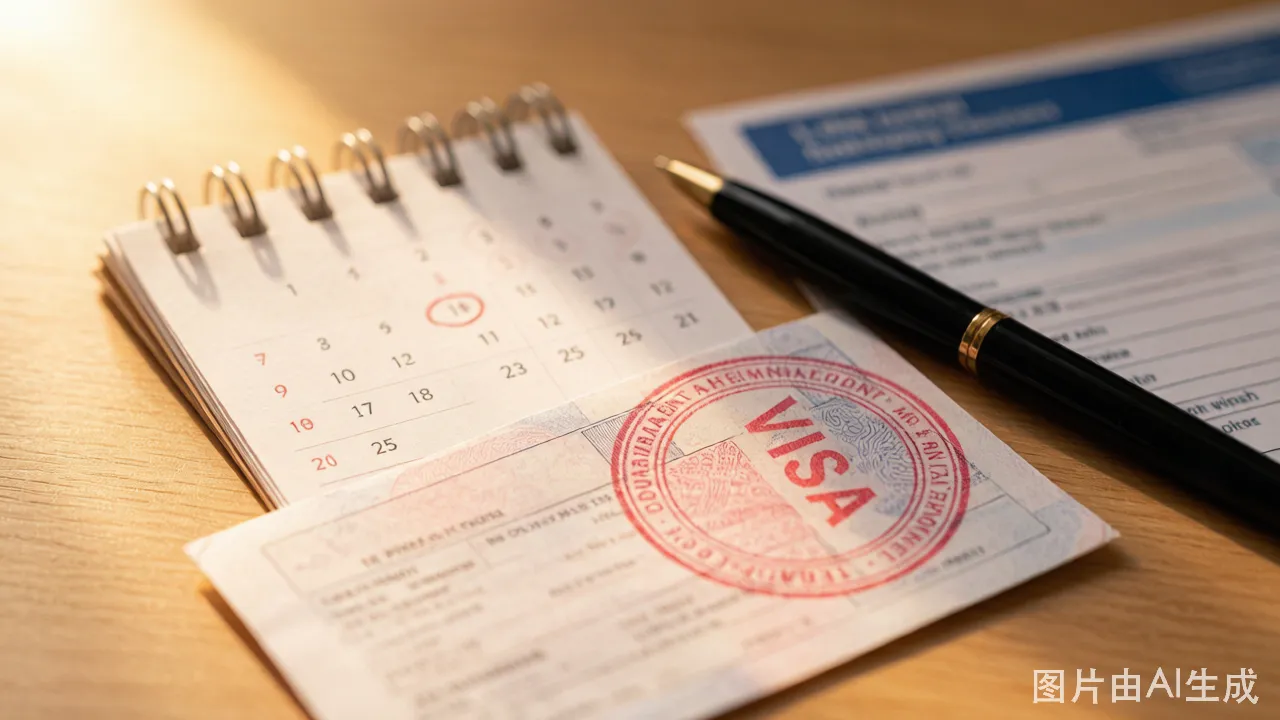
When you enter China, the immigration officer stamps your passport with an entry stamp (入境章). The stamp contains:
- The date of entry
- The port of entry (e.g., "Beijing Capital")
- A handwritten annotation: "停留至" (stay until) followed by the permitted last day
- A small serial number
At exit, the officer stamps an exit stamp (出境章). If you overstayed, the exit stamp includes a notation indicating the overstay. The officer enters the overstay into the immigration database linked to your passport number. Even if the physical stamp shows no obvious overstay mark, the electronic record is updated immediately. Future immigration officers see this record the moment they scan your passport.
What Happens Inside the Interview Room
If you self-report an overstay at the Exit-Entry Administration, an officer escorts you to an interview room. It is a small office, typically with:
- A desk with a computer
- Two chairs (one for you, one for the officer)
- A camera recording the interview
- A phone for a translator if needed
The officer asks standard questions:
- When did you enter China?
- When was your permitted stay supposed to end?
- Why did you not leave or extend before the deadline?
- Where have you been staying?
- What is your occupation?
- Have you overstayed before?
Answer honestly. Lying worsens your penalty. Voluntary self-reporting is already a mitigating factor. Do not undermine it with false statements.
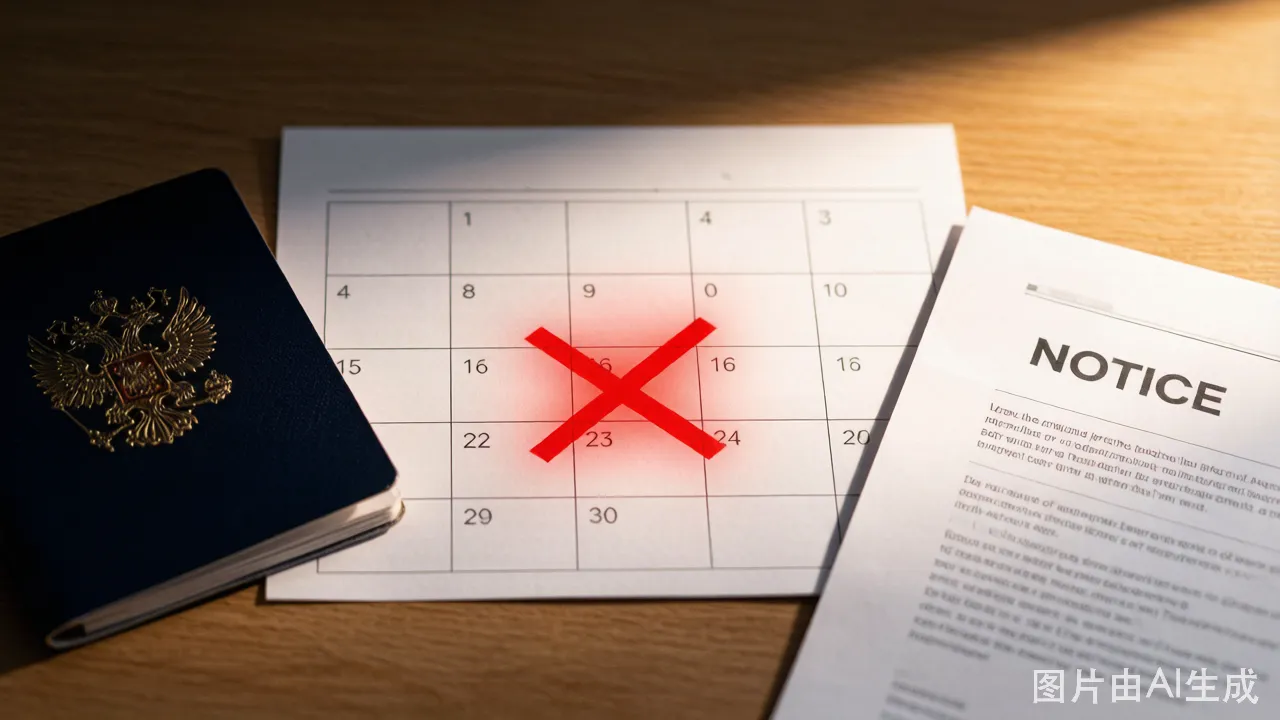
At the end of the interview, the officer prints a penalty decision notice (行政处罚决定书). You sign it. The notice states:
- The violation (overstay)
- The duration
- The penalty (fine, detention, or departure order)
- The payment deadline
- Your right to be heard (though there is no formal appeal)
You then go to a payment counter, pay the fine, and receive a receipt. The officer stamps your passport with a departure deadline if you are ordered to leave.
Entry Ban Duration Table
| Overstay Severity | Ban Duration |
|---|---|
| Under 10 days, first offense | No ban (warning only) |
| 10-30 days | 6 months to 1 year (officer discretion) |
| 31-60 days | 1-3 years |
| 61-90 days | 3-5 years |
| Over 90 days | 5 years to permanent |
| Repeat offense (any duration) | Automatic 5 years minimum |
| Working illegally while overstaying | 5 years to permanent + fine |
These bans are formal legal orders. They appear in China's immigration system and at all border checkpoints. Lying about a ban on a future visa application constitutes fraud and triggers a permanent ban.
How to Apply for a Special Exception
In extreme circumstances, you can request leniency. This is not a formal "appeal" — it is a request for the officer to consider mitigating factors.
Valid grounds for leniency:
- Hospitalization that prevented travel (submit hospital admission records, discharge summary, doctor's certificate stating you were unfit to travel)
- Flight cancellations due to natural disasters or extraordinary government action (submit official cancellation notice, embassy statement)
- Incapacitation (submit medical records proving you were physically unable to report earlier)
Invalid grounds (will be dismissed immediately):
- "I forgot the date"
- "I wanted to see more places"
- "My friend's wedding was after my deadline"
- "The airline website was confusing"
How to request:
- Go to the Exit-Entry Administration.
- State: "I overstayed. I am reporting voluntarily. Here is why, with documentation."
- Present your evidence — medical records, flight cancellation notices, embassy letters.
- The officer reviews the evidence and decides a penalty within the standard range. Strong evidence may result in the lower end of the range (e.g., a warning instead of a fine for a very short overstay with a hospitalization record).
This is not a right. The officer has full discretion. A well-documented genuine emergency gives you the best chance at leniency. A weak excuse makes things worse.
Does the penalty affect future travel to China?
Yes. An overstay record is permanently attached to your passport number in the immigration system. The consequences:
- Future visa applications. Your visa application will be flagged. You may be asked to explain the overstay. Approval is not guaranteed.
- Future visa-free entries. Immigration officers see the overstay record at the border. They may deny entry even if your nationality qualifies for visa-free access.
- Entry ban. For serious overstays (60+ days), the Exit-Entry Administration can impose a formal entry ban of 1 to 5 years, or a permanent ban in extreme cases.
A single one-day overstay resulting in a warning is unlikely to trigger a future entry ban, but it does establish a record. Multiple violations, even minor ones, compound the risk.
What should I do if I have already overstayed?
Go to the Exit-Entry Administration immediately. Do not try to hide the overstay or hope no one notices. Every day you wait increases the penalty.
When you arrive:
- Explain the situation honestly. Voluntary self-reporting before being discovered is considered a mitigating factor.
- Bring your passport, accommodation registration slip, and any documents that explain the reason for the overstay (flight cancellation notice, medical records, etc.).
- You will be interviewed by an officer. They will determine the penalty category based on the duration and circumstances.
- Pay the fine if assessed. The office provides a receipt and a formal penalty notice.
- If ordered to leave by a specific date, comply exactly. The departure deadline on the penalty notice is non-negotiable.
What if I am caught overstaying rather than self-reporting?
The penalty is significantly worse. Being discovered through a police check, hotel registration, or border checkpoint:
- Eliminates the mitigation of voluntary reporting
- Increases the likelihood of detention
- Makes an entry ban more probable
- May result in being escorted to the airport for immediate departure
Common scenarios that lead to overstay
- Misunderstanding the counting method. The 30-day visa-free stay is counted from midnight of the day after entry. If you arrive on June 1, day 1 is June 2, and day 30 is July 1. You must depart by July 1. Some travelers miscalculate by counting the arrival day as day 1, which makes their planned departure one day late.
- Flight delays. Your 10 PM flight on the last day of your stay gets cancelled and rescheduled for the next morning. You now technically overstay. In practice, a documented flight cancellation and immediate self-reporting usually results in leniency, but there is no guarantee.
- Not checking the entry stamp. Some travelers do not look at the stamp the immigration officer gives them. If the officer writes a shorter stay period than expected (e.g., 15 days instead of 30), the stamped number controls — not the policy you thought applied.
- Counting from visa issue date instead of entry date. Your visa's validity period (e.g., "Enter before December 31") is the window to enter China. Your stay duration (e.g., "Duration of each stay: 30 days") starts from the entry stamp date. Confusing the two leads to miscalculation.
How to avoid overstaying
- Photograph your entry stamp immediately at the immigration counter.
- Count the permitted stay days carefully — from midnight after arrival, not from your arrival time.
- Set a phone reminder 7 days before your stay expires. This gives you time to apply for an extension if needed, or to adjust your departure plans.
- If your return flight is on the last day, book a morning flight — do not push it to an evening departure. If the evening flight is cancelled, you have no buffer.
- Apply for an extension early if you know you need more time. Do not wait until the last 48 hours.