Can foreigners go to any hospital in China?
Yes, technically. Any public hospital in China must treat any person in need of emergency care. There is no requirement to be a Chinese citizen or resident.
In practice, the experience varies dramatically. Public hospitals in China are high-volume institutions. Registration, payment, doctor consultations, tests, and pharmacy visits happen in different locations within a large complex, and nearly all signage and communication is in Chinese. The system is designed for efficiency at scale, not for guiding a non-Chinese speaker through the process.
For non-emergency care, foreigners should use either:
- International hospitals — private facilities designed for expatriates and foreign visitors
- International/VIP departments of public hospitals — separate wings with English-speaking staff, streamlined processes, and shorter wait times
How Hospital Departments Look and What to Look For
When you approach a Chinese hospital, you see a large building complex. Look for these signs:
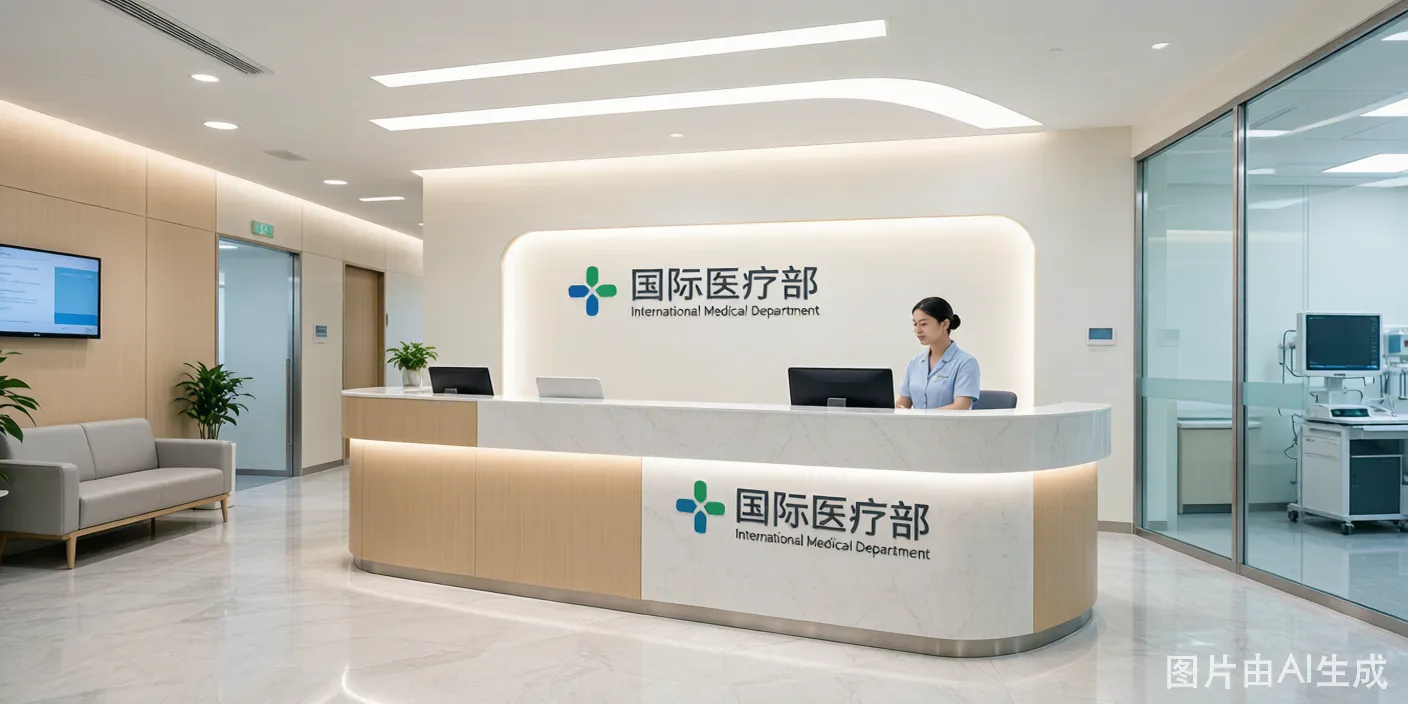
- 国际医疗部 (International Medical Department) — a separate building or wing, often with its own entrance. The sign includes English text.
- 急诊 (Jízhěn / Emergency) — red signage, usually a dedicated entrance with an ambulance bay. This is where you go for emergencies.
- 门诊 (Ménzhěn / Outpatient Clinic) — the main building entrance where most patients enter. Massive crowds, long lines. Avoid this if you have an alternative.
International hospitals like United Family (和睦家) look different: smaller, cleaner signage, English first on all labels, and a receptionist who speaks to you in English the moment you walk in. The building exterior resembles a private clinic in your home country, not a massive public facility.
Step-by-Step: Registration Through Pharmacy
Here is exactly what happens at each window in a Chinese public hospital. This sequence is the same at nearly every public hospital in the country.
Step 1: Registration (挂号 / Guàhào)
You walk to the Registration Counter. This is usually a long counter with multiple windows, each labeled with a number. You see a crowd of people holding registration cards and queue tickets.
What you do:
- Go to any open window.
- Hand the staff member your passport.
- Say the department you need. If you do not speak Chinese, show a translation on your phone. Common departments:
- 内科 (Internal Medicine) — general illness, fever, stomach issues
- 外科 (Surgery) — injuries, fractures, cuts
- 皮肤科 (Dermatology) — rashes, skin problems
- 骨科 (Orthopedics) — bone and joint problems
- 耳鼻喉科 (ENT) — ear, nose, throat
- 眼科 (Ophthalmology) — eye problems
- Pay the registration fee (20-100 RMB depending on the doctor's seniority).
- Receive a registration card with your queue number and the room number.
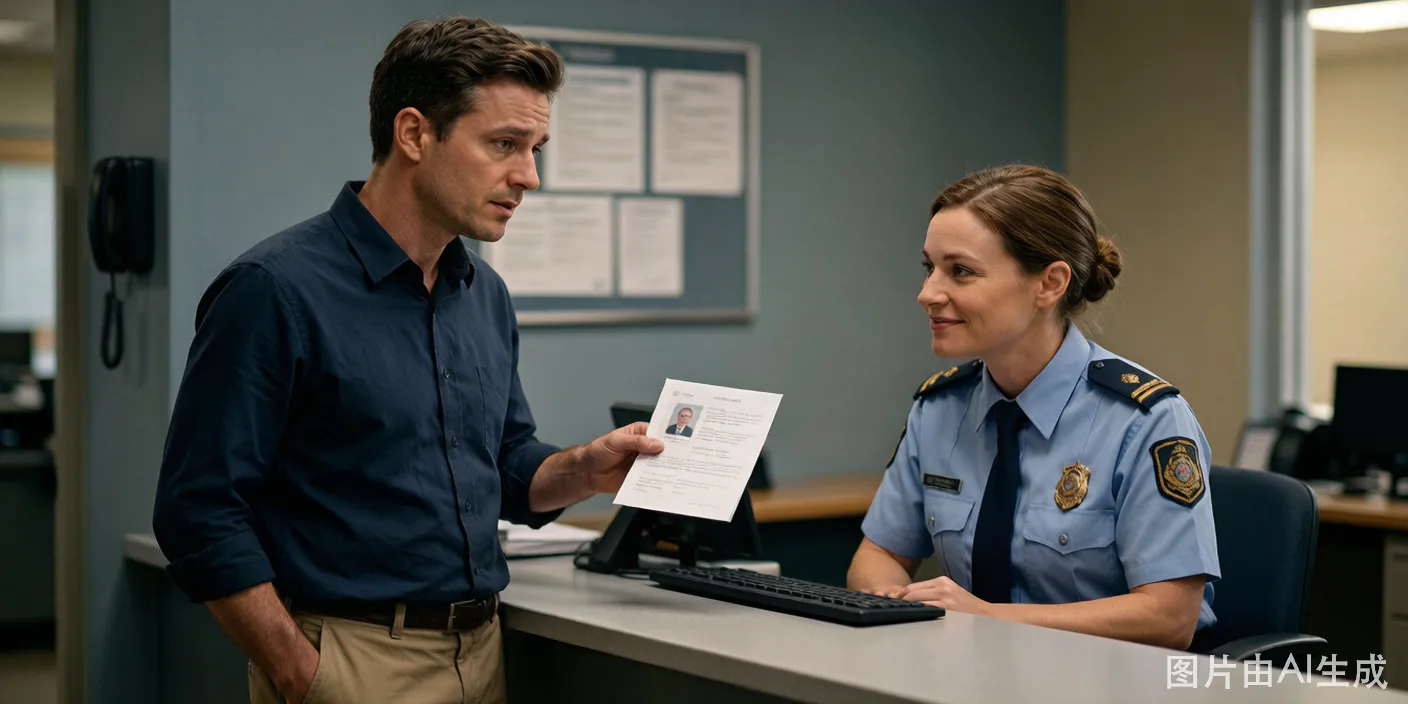
At an international department: You skip this entirely. A coordinator greets you at the reception desk, takes your passport, and handles registration on your behalf.
Step 2: Wait for Your Turn
Find the department area. Screens above the doors show current queue numbers. When your number appears, enter the room. Wait times:
- Public hospital standard department: 1-3 hours
- Public hospital VIP wing: 15-30 minutes
- International hospital: 5-15 minutes
Step 3: Doctor Consultation
The doctor sees you for 5-10 minutes in a standard public hospital. In a VIP or international setting, you get 15-30 minutes. The doctor writes prescriptions and test orders on a single slip of paper — keep this slip. You need it for every next step.
Step 4: Payment (缴费 / Jiǎofèi)
Take the doctor's slip to the Payment Window. This is a separate counter, usually on the same floor. Multiple windows, long lines. Hand the slip and your payment method. The cashier:
- Scans your registration card
- Reads the doctor's orders from the slip
- Tells you the total amount
- Takes your payment and gives you a stamped receipt
What insurance cards look like at the payment window: At the international department, you hand the cashier your insurance card along with your passport. If the hospital has a direct billing agreement with your insurer, the cashier swipes your card and verifies coverage. You then sign a claim form and pay nothing upfront (or just the co-pay). If there is no direct billing, you pay the full amount and file a claim with your insurer afterward. Keep every receipt.
Step 5: Tests or Imaging
If the doctor ordered blood work, X-rays, or other tests, the payment receipt directs you to the test center — often a different floor. Hand the receipt at the test registration desk. They give you a queue number and a collection tube (for blood) or direct you to a waiting area. Results are available anywhere from 30 minutes to the next day, depending on the test. You must collect results yourself (printed at a self-service machine that scans your registration card), then return to the doctor with the printout.
Step 6: Pharmacy Pickup (药房 / Yàofáng)
If the doctor prescribed medicine, your payment receipt includes a pharmacy counter number. Go to the pharmacy — usually on the ground floor, a separate counter from payment. Hand your receipt to the pharmacist. They:
- Retrieve the prescribed medications
- Read the dosage instructions aloud in Chinese
- Hand you the medicine with a printed label showing your name, the drug name, and dosage
At international hospitals: The pharmacy is a single counter. The pharmacist speaks English. They explain dosage in detail.
At a public hospital pharmacy, the label is in Chinese. Verify the drug name against what the doctor told you. Use your phone to photograph the label and translate it before leaving the counter.
Recommended Hospitals by City
Beijing
| Hospital | Type | Notes |
|---|---|---|
| Beijing United Family Hospital (和睦家) | Private international | Full English service, accepts most international insurance, expensive but the gold standard for foreigner care. 24-hour emergency department. |
| Peking Union Medical College Hospital (协和医院) — International Medical Service | Public VIP wing | Top-tier Chinese hospital with an international department. English-speaking staff. Less expensive than United Family. |
| Beijing Friendship Hospital (友谊医院) — International Medical Center | Public VIP wing | Good English support. Well-regarded for gastroenterology and tropical medicine. |
| Raffles Medical Beijing | Private international | Singapore-based international clinic. Family medicine, health screenings, and specialist referrals. |
Shanghai
| Hospital | Type | Notes |
|---|---|---|
| Shanghai United Family Hospital (和睦家) | Private international | Same standard as Beijing location. 24-hour emergency department. Located in Changning District. |
| Jiahui International Hospital (嘉会) | Private international | Modern facility in Xuhui District. Full English service, strong in oncology and cardiology. |
| Huashan Hospital (华山医院) — Worldwide Medical Center | Public VIP wing | Renowned for neurology and dermatology. International center with English service. |
| Ruijin Hospital (瑞金医院) — International Medical Center | Public VIP wing | One of Shanghai's best public hospitals. International wing accepts foreign insurance. |
| Shanghai East International Medical Center | Public VIP wing | Located in Pudong. Convenient for business travelers. |
Guangzhou
| Hospital | Type | Notes |
|---|---|---|
| Guangzhou United Family Hospital (和睦家) | Private international | Full English service in Tianhe District. |
| Clifford Hospital (祈福医院) | Private/JCI accredited | Panyu District. JCI-accredited, English-speaking staff. |
| Guangdong Provincial People's Hospital — International Medical Center | Public VIP wing | Strong in cardiology. English-speaking coordinators available. |
Shenzhen
| Hospital | Type | Notes |
|---|---|---|
| Shenzhen United Family Hospital (和睦家) | Private international | Futian District. Smaller than Beijing/Shanghai locations but same standard. |
| HKU-Shenzhen Hospital (香港大学深圳医院) — International Medical Center | Public VIP wing | University of Hong Kong-affiliated. English service, strong in multiple specialties. |
Chengdu
| Hospital | Type | Notes |
|---|---|---|
| Chengdu United Family Hospital (和睦家) | Private international | Full English service. |
| West China Hospital (华西医院) — International Medical Center | Public VIP wing | One of China's top-ranked hospitals. The international center provides English coordination. |
VIP International Clinics — Full National List
Beyond the major hospitals listed above, these standalone clinics provide English-speaking GP and specialist care:
| Clinic | Cities | What They Offer |
|---|---|---|
| ParkwayHealth | Shanghai, Beijing, Suzhou, Chengdu, Nanjing | GP, pediatrics, OB/GYN, dental, psychology. Accepts major international insurance. |
| Raffles Medical | Beijing, Shanghai, Chongqing, Nanjing, Tianjin | GP, health screening, specialist referral, 24-hour emergency (Beijing/Shanghai). |
| DeltaHealth | Shanghai | Cardiology-focused. Full-service hospital with English-speaking cardiologists. |
| Global Doctor | Beijing, Guangzhou, Chengdu, Chongqing, Shenyang, Nanjing | GP, family medicine, travel medicine. Smaller clinics, shorter wait. |
| International SOS | Beijing, Shanghai, Tianjin, Nanjing, Dalian | Assistance and clinic services. Good for insurance-referred cases. |
Call any of these clinics before you go. They confirm insurance coverage over the phone and give you an exact arrival time.
Cost Comparison
| Service | Public Hospital | Public VIP Wing | Private International |
|---|---|---|---|
| GP consultation | 20-50 RMB | 300-800 RMB | 800-1,500 RMB |
| Specialist consultation | 50-100 RMB | 500-1,200 RMB | 1,200-2,500 RMB |
| Blood test (basic) | 50-150 RMB | 200-500 RMB | 500-1,000 RMB |
| X-ray | 100-200 RMB | 300-800 RMB | 800-2,000 RMB |
| Emergency room visit | 100-300 RMB | 800-1,500 RMB | 1,500-3,000 RMB |
Pharmacies and Over-the-Counter Medicine
Pharmacies (药店 / yàodiàn) are plentiful — look for the green cross sign. Over-the-counter medications for colds, headaches, allergies, and digestive issues are available without prescription. Prescription medications require a Chinese doctor's prescription — you cannot use a foreign prescription.
Pharmacists may not speak English. To get the right medication:
- Show them a photo of the medication packaging (if you know what you need)
- Write down the generic drug name (e.g., "ibuprofen," "loratadine")
- Use a translation app to describe your symptoms
Emergency Medical Care
For emergencies, dial 120 for an ambulance. In a life-threatening situation, you can also go directly to the nearest hospital emergency room (急诊 / jízhěn).
Ambulance response times in major cities are typically 10-20 minutes. The ambulance will transport you to the nearest hospital with an emergency department — you do not choose the destination. Emergency room treatment is provided first; payment is handled afterward.
If you are conscious and the situation is not immediately life-threatening, and you have the option, going directly to an international hospital emergency department will result in a more familiar standard of care and communication.