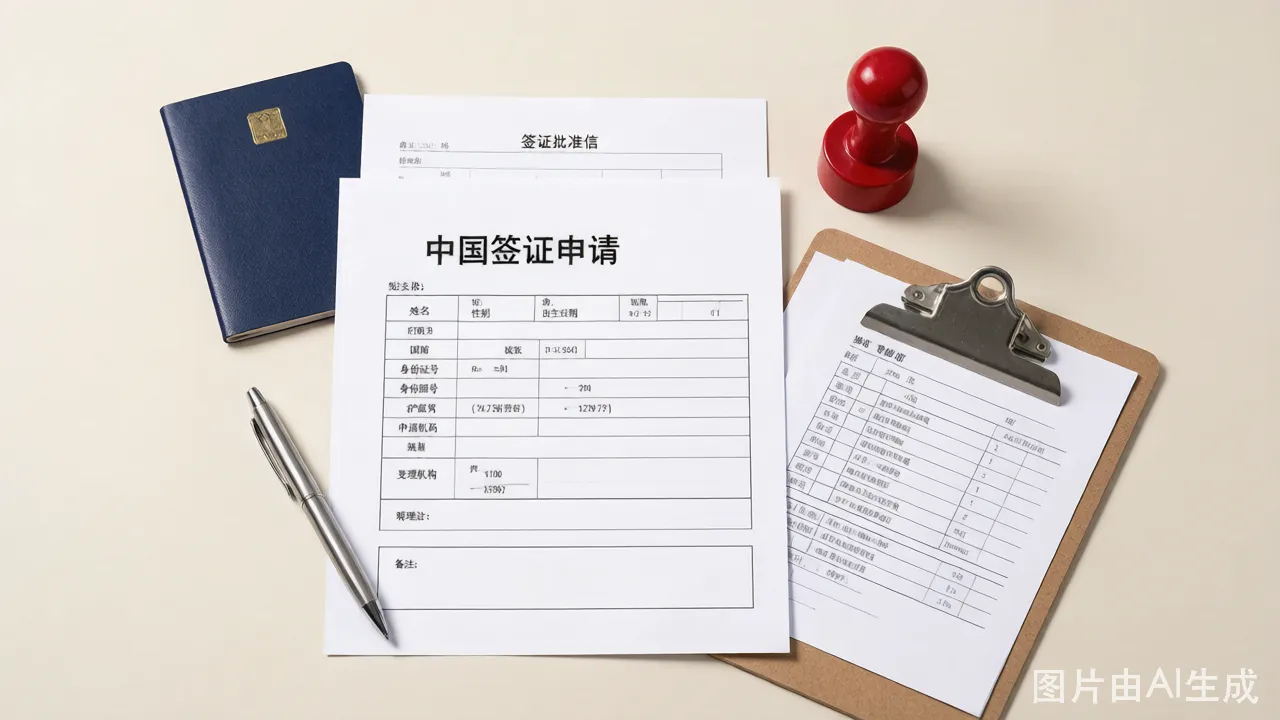
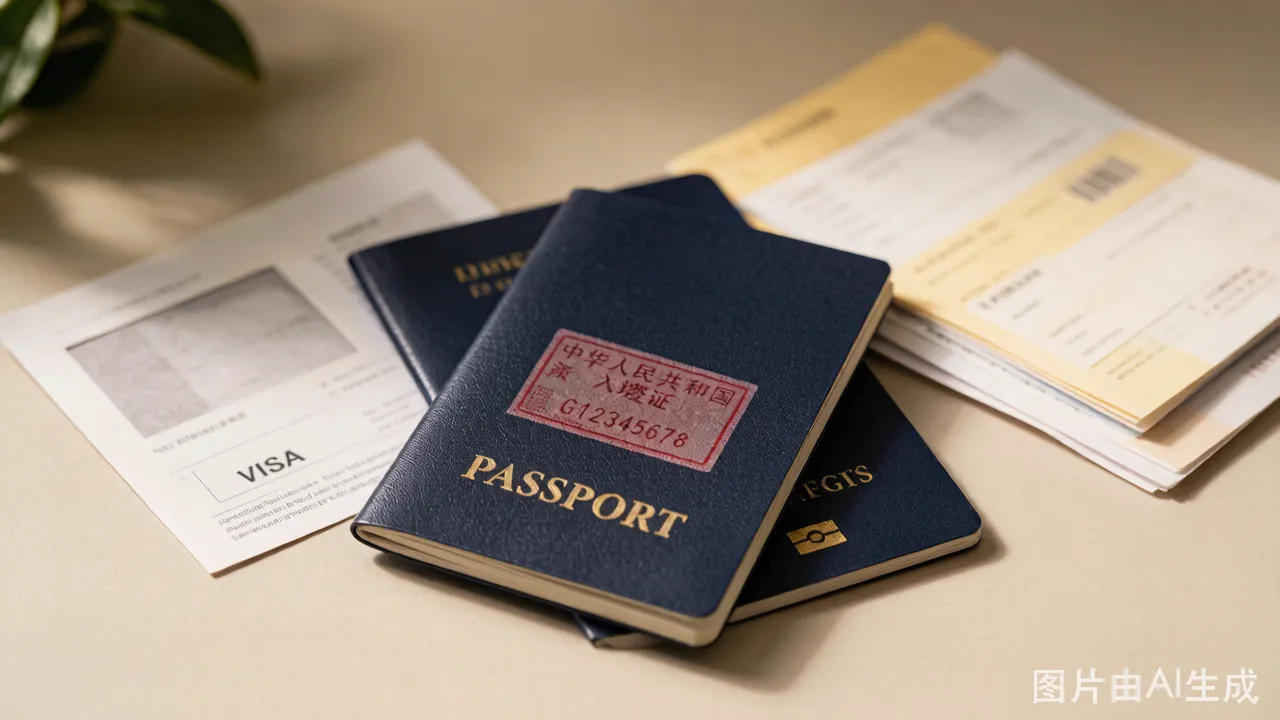
Three checkpoints stand between you and the curb outside a Chinese airport: the airline gate at your departure airport, the immigration counter inside China, and the customs inspection after baggage claim. Each checkpoint checks different documents. You need a different stack for each one. This guide tells you what goes in each stack and what each document looks like so you recognize a problem before you leave home.
Printable Checklist: Everything in One View
Print this section. Tape it to your luggage. Check each box before you leave for the airport.
╔══════════════════════════════════════════════════════════════╗
║           CHINA ENTRY DOCUMENTS CHECKLIST                    ║
╠══════════════════════════════════════════════════════════════╣
║                                                              ║
║  FOR THE AIRLINE (departure airport)                         ║
║  □ Passport: 6+ months validity from entry date              ║
║  □ Visa or visa-free eligibility confirmation                ║
║  □ Return/onward flight ticket (printed)                     ║
║  □ Hotel booking: first 3 nights minimum (printed)           ║
║                                                              ║
║  FOR IMMIGRATION (arrival in China)                          ║
║  □ Passport: open to data page                               ║
║  □ Completed Health Declaration QR code (screenshot + print) ║
║  □ Return/onward flight ticket (printed)                     ║
║  □ Accommodation address (printed, in Chinese characters)    ║
║  □ Invitation letter (for M/F visa holders)                  ║
║  □ Work permit / Admission notice (for Z/X visa holders)     ║
║                                                              ║
║  FOR CUSTOMS (after baggage claim)                           ║
║  □ Customs Declaration Form (handed out on the plane)        ║
║  □ Receipts for high-value items (if declaring goods)        ║
║                                                              ║
║  DIGITAL BACKUPS (phone, accessible offline)                 ║
║  □ Photo of passport data page                               ║
║  □ PDF of flight confirmation                                ║
║  □ PDF of hotel booking                                      ║
║  □ Screenshot of Health Declaration QR code                  ║
║  □ PDF of invitation letter / work permit / admission notice ║
║                                                              ║
║  DO NOT PACK THESE IN CHECKED LUGGAGE.                       ║
║  ALL DOCUMENTS GO IN YOUR CARRY-ON.                          ║
║                                                              ║
╚══════════════════════════════════════════════════════════════╝
What Each Document Looks Like
You hand documents to strangers at counters. Know what a real one looks like so you can spot an error before they do.
Passport data page. The laminated page at the front of your passport. It shows your photo (full face, no expression), your full legal name, passport number in the top right corner, nationality code (3 letters), date of birth in DD/MM/YYYY or MM/DD/YYYY format, date of issue, date of expiry, and the machine-readable zone at the bottom: two lines of chevron-bracketed text that immigration scanners read. Check that every character on the data page matches every character on your visa sticker and your airline booking. One mismatch halts you at the gate.
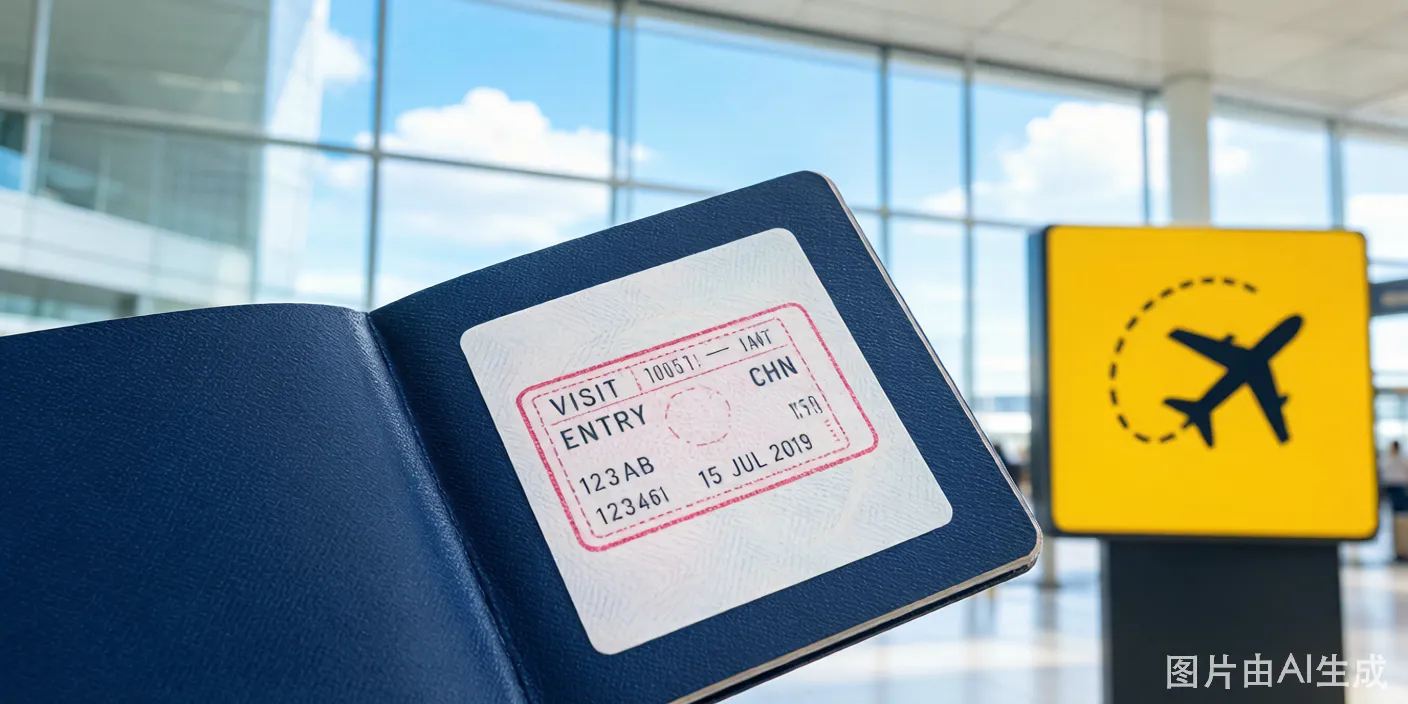
Chinese visa sticker. A full-page adhesive sticker with a green or light blue background and a Great Wall watermark pattern. The sticker fills an entire passport page. At the top left, your laser-printed black-and-white photo. Below it, your name in Latin characters, passport number, visa category (a single letter: L, M, F, Z, X1, X2, Q1, Q2), number of entries (01, 02, or M), duration of each stay (030 for 30 days, 060 for 60, 090 for 90), issue date, and "Enter Before" date. A QR code sits in the bottom left corner. The sticker has holographic anti-counterfeit elements visible when you tilt it under light. No sticker, no entry. If the sticker is peeling off the page, the consulate used a defective adhesive batch. Tape the edges down with clear tape before you travel. A loose sticker at immigration wastes 15 minutes while the officer verifies it manually.
Health Declaration QR Code. You fill out the form at the China Customs website or WeChat mini-program within 24 hours before arrival. After submitting, the screen shows a black-and-white QR code on a white page with your name above it in small text. The code has a 24-hour validity window. If your flight departs Friday evening and you submit Friday morning, and you arrive Saturday afternoon, the code remains valid. If your flight delays by 6 hours and pushes arrival past the 24-hour mark, resubmit before boarding. Immigration scanners read the code. A screenshot works. A printed copy works. Showing the website works only if you have data roaming on your phone.
Return or onward flight ticket. The confirmation page from your airline or booking platform. It shows your full name (match your passport), the flight number (two-letter airline code plus digits, like CA982 or MU588), departure date and time, departure airport and arrival airport in three-letter IATA codes (PEK for Beijing Capital, PVG for Shanghai Pudong, CAN for Guangzhou Baiyun), the booking reference (a 6-character alphanumeric code), and the ticket status: "Confirmed." A reservation hold that says "Pending" or "Waitlisted" does not satisfy the requirement. Print the confirmation page showing "Confirmed" and the seat number if available.
Hotel booking confirmation. The email or PDF from your hotel or booking platform. It shows the hotel name in English and Chinese, the full street address, your check-in and check-out dates, your name as the guest, and a booking reference number. The first night's address is the critical piece. Book a hotel that covers at least your first 3 nights. Immigration officers write your first accommodation address into their system. If your first booking is for 1 night and you have no second booking to show, the officer may ask how you will spend the remaining 29 days of your stay. Have the full itinerary printed.
Invitation letter (M and F visa holders). A single-page document on the Chinese host organization's letterhead. It states the host company or institution name in Chinese, the visitor's full name and passport number, the purpose of the visit, the dates of the visit, cities to be visited, and a guarantee statement: "We guarantee that [name] will abide by Chinese laws and regulations during their stay." The letter carries the organization's official round stamp in red ink. A photocopied stamp in black and white does not count. Ask your host for a color scan of the original stamped letter. Print the color scan.
Customs Declaration Form. A yellow paper card roughly the size of a postcard. Flight attendants hand these out 30 minutes before landing on flights to China. The card has checkboxes on the front for declaring: cash exceeding 5,000 USD (or equivalent), cultural relics, endangered species products, radio transmitters, and items for commercial use. The back lists prohibited items: weapons, drugs, counterfeit currency, printed material deemed harmful to China's interests. If you have nothing to declare, check the green "Nothing to Declare" box and walk through the green channel after baggage claim. If you declare something, go through the red channel. Fill out the card on the plane. Do not wait until you stand in the customs line.
Who Checks What and When
Your documents face inspection in sequence. Know the sequence and what each inspector wants.
Checkpoint 1: The Airline (Departure Airport)
What happens. You approach the check-in counter or boarding gate. The airline agent scans your passport and checks the Timatic database for China's entry rules. They verify your documents against a checklist provided by Chinese immigration authorities.
What they check.
- Passport validity: 6 months minimum from the date you will enter China.
- Visa or visa-free eligibility: your passport nationality matches the visa-free list, or your visa sticker is present and the "Enter Before" date has not passed.
- Return or onward ticket: a confirmed booking showing departure from China within your allowed stay period.
- Hotel booking: not always checked, but agents in Amsterdam, Paris CDG, London Heathrow, Frankfurt, and Dubai frequently ask for it before issuing a boarding pass.
What happens if you fail. The agent refuses to issue a boarding pass. You do not get on the plane. The airline does not compensate you. Your ticket is non-refundable in most cases. The airline faces fines of 5,000 to 10,000 USD per passenger who arrives at Chinese immigration without proper documents and gets sent back. Their gate agents enforce the rules because the fines come out of the station budget.
Tip for the airline counter. Have all documents in one folder. Hand over your passport, printed return ticket, and printed hotel confirmation in a single stack. Answer questions with short factual statements. "I am traveling on a tourist visa. Here is my return ticket for July 5. I am staying at the Holiday Inn for my first three nights." Efficiency signals you are a low-risk passenger.
Checkpoint 2: Immigration (Arrival in China)
What happens. You walk off the plane, follow the International Arrivals signs, and enter the immigration hall. You queue at a counter designated for foreign passports. The border officer sits behind glass. A camera above the counter photographs your face. You slide your passport through the slot.
What they check.
- Passport validity and authenticity. The officer examines the data page under UV light and checks the security features.
- Visa sticker (if applicable). The officer scans the QR code on the sticker. Their terminal displays your visa details and compares them against the central database.
- Visa-free eligibility (if applicable). The officer confirms your nationality is on the current list and checks your permitted stay duration.
- Purpose of visit. The officer asks. Your answer must match your visa category or visa-free permitted purpose.
- Accommodation address. The officer enters the address of your first night's stay into the system. This triggers the automatic police registration process if you are staying at a hotel.
- Return or onward ticket. The officer may ask to see it. The ticket departure date must fall within your permitted stay.
- Health Declaration QR Code. The officer may scan it at the counter, or you may scan it at a kiosk in the immigration hall before reaching the counter. Follow the signs.
What happens if you fail.
- Minor discrepancy (address mismatch, no printed booking): the officer pulls you to secondary inspection. A supervisor reviews your documents and asks additional questions. This takes 20 to 45 minutes. You usually still get admitted if your documents are otherwise valid.
- Major discrepancy (expired passport, wrong visa type, no visa at all when one is required, or you state a prohibited purpose of visit): the officer issues a refusal of entry. You wait in a holding area. The airline that flew you in must fly you back on the next available flight. You bear the cost of the return ticket.
- Overstay risk flagged (insufficient funds, no onward ticket, vague travel plans): the officer may shorten your permitted stay below the maximum. Instead of 30 days, they stamp you in for 7 or 14 days. The handwritten date in your passport controls. You leave by that date regardless of your plans.
Tip for immigration. Know your accommodation address in Chinese characters. Read it from your printed card. Do not mumble. Do not guess. State your purpose in three words or fewer. "Tourism." "Business meeting." "Visiting sister." Hand over supporting documents only when the officer asks. Do not volunteer your life story.
Checkpoint 3: Customs (After Baggage Claim)
What happens. You pick up your checked luggage from the carousel. You walk through a channel marked Green (Nothing to Declare) or Red (Goods to Declare). Customs officers stand by each channel. They observe the flow and pull people aside based on luggage appearance, behavior, or random selection.
What they check.
- Customs Declaration Form. You hand it to the officer at the channel exit or drop it in a box. Some airports use electronic declaration kiosks instead of paper forms. Follow the signs.
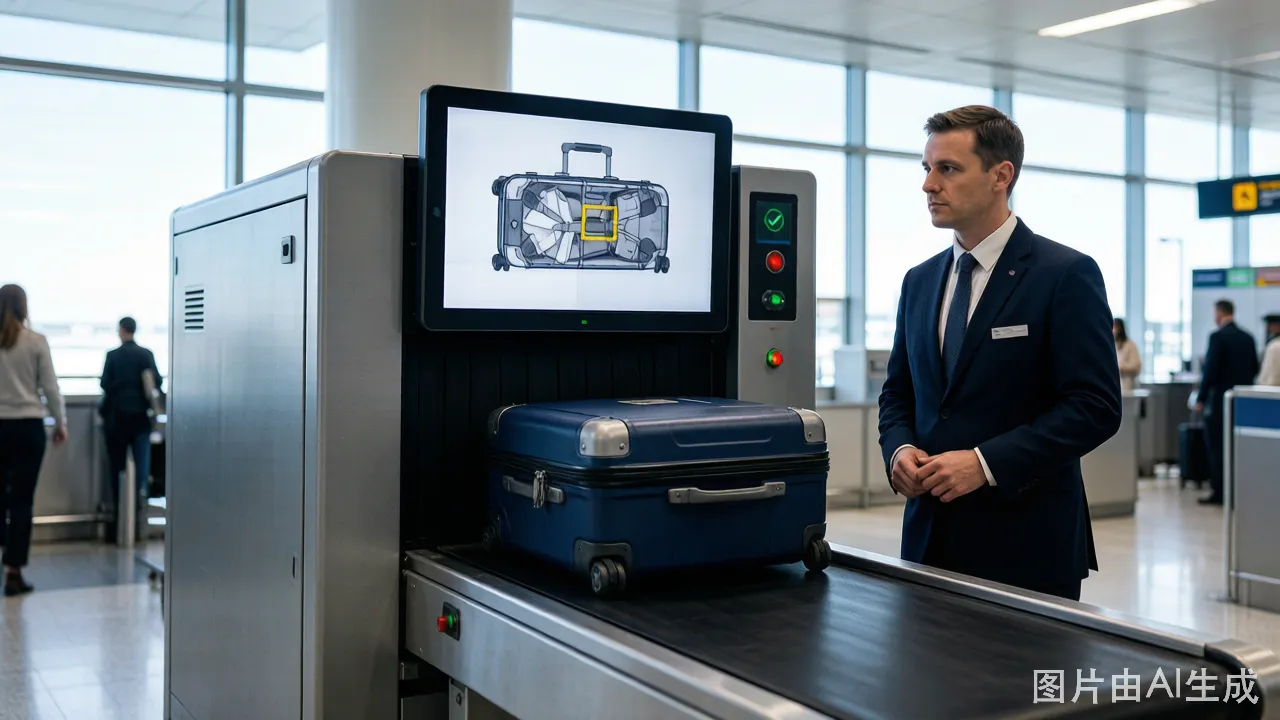
- Luggage contents. Officers may X-ray your luggage after you pick it up from the carousel. Some airports run all bags through a scanner between baggage claim and the exit. Others use random spot checks.
- High-value items. If you carry goods for commercial resale, cash exceeding 5,000 USD, or items requiring permits (radio equipment, certain medications, animal products), declare them on the Red channel. Failure to declare triggers confiscation and fines starting at 20% of the item's value.
Common items that require declaration.
- Cash: 5,000 USD or equivalent and above. You fill out a separate cash declaration form.
- Gold and precious metals: any amount above personal jewelry quantities.
- Radio transmitters: drones, walkie-talkies, satellite phones. Drones face special scrutiny. Some ports confiscate drones regardless of declaration.
- Medicines: prescription drugs in quantities beyond personal use. Carry your prescription. A 90-day supply in original packaging with your name on the label rarely raises issues. A suitcase full of medication in unlabeled bottles triggers confiscation and possible legal action.
- Seeds, plants, meat products, dairy products: all require quarantine inspection. The sniffer dog at baggage claim targets these items. Do not pack beef jerky, cheese wheels, or fruit.
What happens if you fail. The customs officer pulls your bag for manual inspection. You open it. They examine the undeclared items. For minor violations (a few packs of luxury goods for personal use), they assess a duty and let you go. For major violations (undeclared cash, prohibited items, commercial goods), they issue a fine and may refer you for investigation. Deliberate smuggling leads to criminal charges.
Digital Copies vs. Paper Copies
Printed documents work everywhere. Phone screens work at most checkpoints. Until they do not. Here is the rule: carry paper for the three critical items. Use digital for everything else.
Paper (required):
- Passport. You cannot use a photo of your passport. You need the physical passport. No digital alternative exists.
- Visa sticker. It lives in your physical passport. No digital alternative exists.
Paper (strongly recommended):
- Return flight confirmation. Immigration officers in secondary inspection prefer paper. Your phone may have no signal after a long-haul flight. The officer may not want to touch your phone for hygiene reasons. Print this.
- Hotel booking confirmation. Same reasons as the flight confirmation. Immigration officers enter your address from a physical document faster than from a phone screen they cannot read.
- Health Declaration QR Code. The scanner at the kiosk reads a screenshot, but if the kiosk scanner is broken and you must show an officer, paper wins. Print it.
Digital only (acceptable):
- Invitation letter. A PDF on your phone works at immigration. The officer checks the stamp visually. No scanning equipment required.
- Work permit or admission notice. PDF on your phone is fine.
- Bank statements showing sufficient funds. Rarely asked for. A screenshot or PDF on your phone covers you if the question comes up.
The dead phone scenario. You land at Shanghai Pudong at 10 PM. Your phone battery died on the 12-hour flight. You have no charger. All your documents sit behind a black screen. The immigration officer asks for your hotel booking and return flight. You say "It's on my phone." The officer says "Show me." You cannot. Secondary inspection awaits.
Pack your phone charger in your carry-on. Charge your phone before landing. Bring a power bank. Carry a printed copy of your hotel booking and flight confirmation as insurance. A single sheet of folded paper in your passport costs you 10 seconds at a printer. It saves you 45 minutes at immigration.
Core Documents (All Travelers)
Every foreigner entering China must have these four items. No exceptions.
| Document | Requirement | Where Checked |
|---|---|---|
| Passport | 6+ months validity from entry date | Airline gate, immigration |
| Health Declaration Form | Submitted within 24 hours before arrival | Immigration (kiosk or counter) |
| Proof of onward travel | Confirmed ticket with departure date within permitted stay | Airline gate, immigration |
| Accommodation details | Hotel booking or host address in Chinese characters | Immigration |
Visa-Free Entry — Additional Documents
If you enter under the unilateral visa-free policy, an officer may also ask for:
- Printed hotel reservation covering at least your first 3 nights
- Host's full address and phone number in Chinese characters (if staying privately)
- Invitation letter for business or exchange visits
- Travel itinerary covering your full stay (bullet points on one page, not a polished document)
- Bank statement showing sufficient funds (a screenshot from your banking app covers this)
Officers do not check every item on this list for every traveler. But they check some items for some travelers. You do not know which traveler you are until the officer asks. Carry all five items.
Visa Holders — Additional Documents
If you hold an L, M, F, Z, X, or Q visa, carry the documents you submitted with your application:
- The visa sticker in your passport. Verify every field at the consulate before you leave.
- Invitation letter for M and F visas. The officer may cross-check the host organization against the visa category.
- Admission notice for X visa holders. Universities check this at the registration desk, not at immigration. But carry it anyway for the first entry.
- Work permit for Z visa holders. Border officers ask for the work permit notification letter. Show it.
- Hotel booking or residence address matching your visa application address. If your visa application lists the Beijing Marriott and you present an address in rural Yunnan, expect questions.
Carrying these documents is not optional for your first entry. The border officer may not ask for them, but if they do and you do not have them, you face secondary inspection. The officer's terminal shows the documents you uploaded with your application. They compare what you carry to what you claimed.
Transit Without Visa — Additional Documents
If you use the 24-hour, 144-hour, or 240-hour transit visa-free policy, you need:
- Confirmed onward ticket to a third country or region. The ticket must show a seat assignment and a departure date within the transit window. A flight reservation without a confirmed seat is not sufficient.
- Entry and exit through designated ports. Not every airport participates. Check the National Immigration Administration's port list for your transit window before booking.
- The onward destination must differ from your departure country. A London-to-Shanghai-to-London itinerary disqualifies you. London-to-Shanghai-to-Tokyo qualifies. Hong Kong, Macau, and Taiwan count as third regions.