China Customs enforces strict rules on what can and cannot enter the country. Some items are outright banned. Others are restricted, meaning you can bring them but must declare them and stay within set limits.
The customs inspection poster at the arrival hall shows pictograms of the main prohibited categories — weapons, drugs, wildlife products, counterfeit currency, and plant/animal material. The images are deliberately simple so that non-Chinese speakers can understand them at a glance. A red circle with a slash through a gun, a green plant, and a stack of banknotes is plastered on the wall as you walk toward the inspection area.
Prohibited Items (Absolutely Cannot Bring)
The following items are forbidden from entry under any circumstances:
- Weapons and ammunition — including firearms, replica firearms, airsoft guns, and any parts or accessories. Even a decorative sword or a realistic toy gun can trigger confiscation. Airsoft rifles that are perfectly legal in the UK or Japan are treated as weapons in China. Do not bring anything that resembles a firearm.
- Counterfeit currency — both Chinese RMB and foreign currencies. A single fake 100 RMB note found in your wallet can lead to detailed questioning.
- Narcotics and psychotropic substances — including drugs that are legal in some countries but banned in China. Cannabis, even in CBD oil form, is strictly prohibited. Certain ADHD medications (Adderall, Ritalin) and strong painkillers (OxyContin, Vicodin) fall into China's controlled substance category. Do not assume that because your doctor prescribed it, Chinese customs will allow it.
- Printed or digital materials deemed harmful to China's political, economic, or cultural interests. This includes books, magazines, USB drives, and files on your phone or laptop. Customs officers have the right to inspect the contents of your devices.
- Diseased animals, plants, and their products — including meat, fruit, and plant material from regions under quarantine
- Endangered wildlife species and products — including ivory, rhino horn, certain traditional medicines containing wildlife derivatives. Even a small ivory bracelet purchased legally in another country will be seized.
- Highly toxic substances and radioactive materials
Specific Items List — What Gets Confiscated Most Often
At the X-ray belt, customs officers see the same few items getting flagged every day. Here is what they look for and why:
| Item | Why It Gets Flagged | What Happens |
|---|---|---|
| Fresh fruit (apple, banana, orange) | Agricultural quarantine — potential pests | Confiscated and destroyed. You may be asked where you got it. |
| Packaged meat (jerky, sausage, ham) | Animal disease control | Confiscated. Sealed packaging doesn't matter. |
| Seeds and live plants | Plant quarantine — invasive species risk | Confiscated. Permits required for all plant material. |
| Multiple unopened iPhones/electronics | Suspected commercial import | Held for duty assessment. You may need to pay import tax or prove personal use. |
| Any knife with a blade over 15 cm | Controlled weapon | Confiscated. Smaller pocket knives are sometimes allowed in checked luggage. |
| Laser pointers (high-power) | Restricted item | Confiscated. Low-power presentation pointers are usually fine. |
| Drone (above 250g without registration) | Restricted device | Held until you provide proof of registration in China. |
| CBD products (oil, gummies, vape) | Controlled substance | Confiscated. You may be detained for questioning. Cannabis derivatives are illegal regardless of THC content. |
| Medications not in original packaging | Suspicion of controlled substance | Held for verification. Loose pills in unlabeled bottles raise immediate red flags. |
Agricultural Quarantine — The Section Most Travelers Forget
China's General Administration of Customs runs an agricultural quarantine checkpoint at every port of entry. This is separate from the regular customs inspection and has its own set of rules.
What the quarantine officers are looking for:
- Live insects, larvae, or eggs — on fruit, vegetables, or plant material
- Soil — on shoes, camping gear, or plant roots
- Seeds — any kind, including souvenir seed packets or loose seeds in your bag
- Animal products — including leather, fur, feathers, and raw wool from certain regions
If you have been hiking, camping, or on a farm before your flight, clean your shoes thoroughly. Officers have the authority to disinfect footwear, tents, and outdoor equipment.
Fresh flowers are also prohibited unless accompanied by a phytosanitary certificate. That bouquet from the airport duty-free shop in your departure city? It will be taken at the quarantine checkpoint in China.
Medicine Rules — Prescription Requirements
This section deserves your full attention. Chinese customs treats medications differently from most Western countries.
You must carry documentation for all prescription medication. At a minimum, bring:
- The original prescription, signed by your doctor
- A doctor's letter explaining your condition and the necessity of the medication
- The medication in its original packaging with pharmacy labels intact
- A reasonable quantity — 30 days' supply is the general expectation. Anything more looks like you're importing for resale.
Medications that frequently cause problems:
- ADHD stimulants (methylphenidate, amphetamine-based drugs) — these are controlled substances in China. Some are banned outright. Contact the Chinese embassy in your country at least one month before travel.
- Opioid painkillers — strictly controlled. A doctor's note is mandatory, and the quantity should match your stay exactly.
- Sleeping pills and anti-anxiety medication (benzodiazepines) — controlled but generally permitted with documentation for personal use.
- Psychiatric medications — carry a detailed letter from your treating psychiatrist.
- Hormone therapy medications — permitted for personal use with a prescription.
Over-the-counter medications (paracetamol, ibuprofen, antihistamines) in reasonable quantities are almost never an issue. A small first-aid kit with bandages, antiseptic cream, and common OTC drugs is fine.
A practical tip: put all your medications in a clear ziplock bag and place it at the top of your carry-on. When the X-ray operator sees a bag of pill bottles, they will appreciate not having to dig through your luggage to identify them.
Restricted Items (Must Declare, Limited Quantity)
These items can be brought in but you must declare them and respect quantity limits:
Cash
- RMB: Maximum 20,000 yuan in physical cash
- Foreign currency: Equivalent of USD 5,000 can be brought in without special permission; amounts above this require a customs declaration and a permit from the foreign exchange authority
Alcohol and Tobacco (Duty-Free Allowance)
- Cigarettes: 400 sticks (2 cartons)
- Cigars: 100 sticks, or
- Tobacco: 500 grams
- Alcohol: 1,500 ml of beverages above 12% alcohol by volume
These are the duty-free limits. Amounts above these limits must be declared and are subject to customs duty.
Personal Electronics
- One laptop, one camera, and one mobile phone for personal use generally do not raise issues
- Multiple brand-new, boxed electronic items may be treated as commercial imports and taxed accordingly
Gold, Silver, and Jewelry
- Items exceeding 50 grams of gold must be declared
- Commercially packaged precious metals require a permit
What Happens at the X-Ray Machine
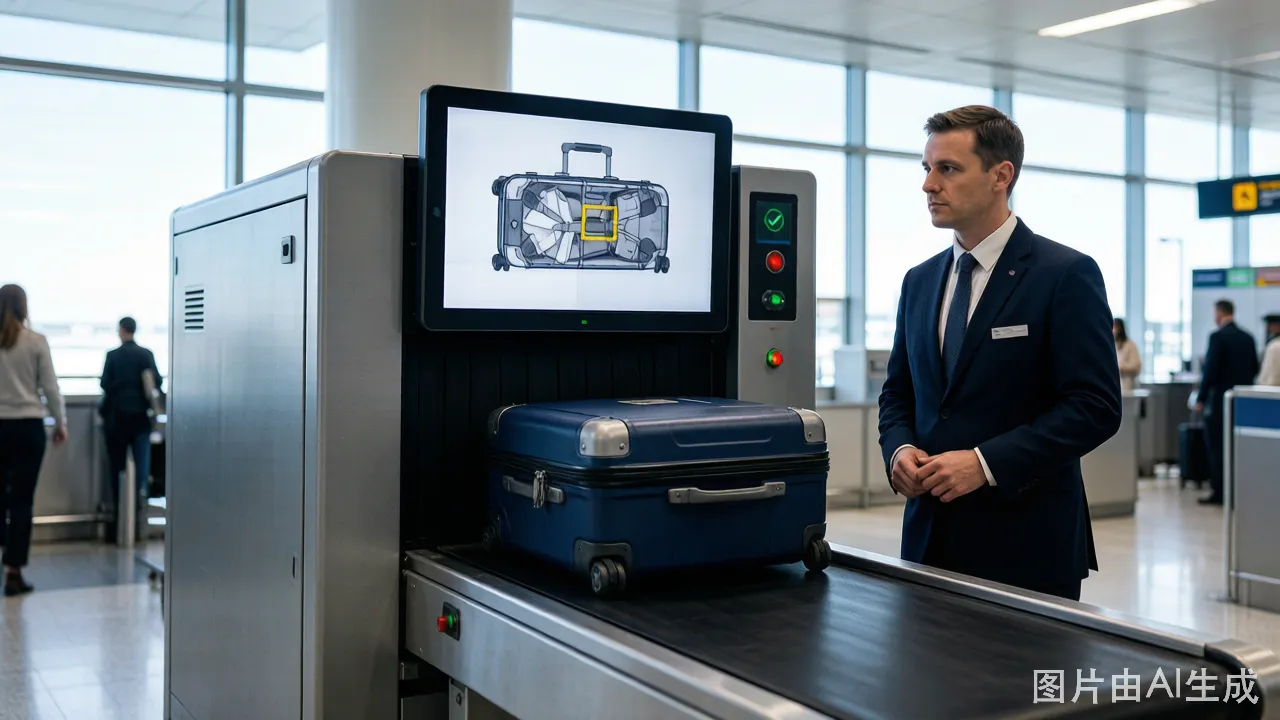
After passport control, you hit the customs inspection zone. There is no separate "red" and "green" channel in the traditional sense at most airports — everyone funnels their luggage through an X-ray scanner regardless of whether they have anything to declare.
Here is how it works in practice:
-
All luggage goes through the scanner. Carry-on bags, backpacks, handbags, and checked luggage (which has already been scanned airside but gets a second pass). You place your items on the belt just like airport security.
-
An officer watches the monitor. The X-ray image shows the density and shape of what is inside. Dense objects (metal, electronics, large stacks of paper — i.e., cash) show up as dark blue or black. Organic material (food, plants, wood) shows up as orange. The officer is trained to spot the silhouette of a gun, the cluster of unboxed electronics, the outline of a bottle of alcohol, and the telltale density of a wad of banknotes.
-
If the officer sees something suspicious, they pull your bag. You will be asked to open it. They may ask you what the item is and why you are carrying it. Answer directly and honestly. Nervousness and evasive answers make the officer more suspicious, not less.
-
Random manual inspections happen too. Even if nothing shows up on X-ray, you can be randomly selected for a bag search. This is normal and happens to both Chinese citizens and foreigners. Cooperate and it will be over quickly.
-
If a prohibited item is found, the conversation changes. The officer will call a supervisor. Depending on the severity, you may be taken to a side room for further questioning, or the item is simply confiscated and you receive a receipt. Confiscation of minor items (fruit, a small knife) is usually the end of it. Controlled substances, weapons, or large quantities of undeclared goods trigger a more serious process.
One thing that surprises people: the X-ray officers are generally polite and matter-of-fact. They process thousands of bags per shift. Unless you give them a reason to be suspicious, the interaction is quick — your bag comes out the other end and you walk through. The whole thing takes 30 seconds if your luggage is clean.
What Happens If You Do Not Declare
China Customs uses a combination of X-ray scanning and random manual inspection. If undeclared restricted items are found:
- The items may be confiscated
- You may be fined
- In serious cases (weapons, drugs, large-scale smuggling), criminal charges may apply
- A customs violation record may affect future visa applications and entry