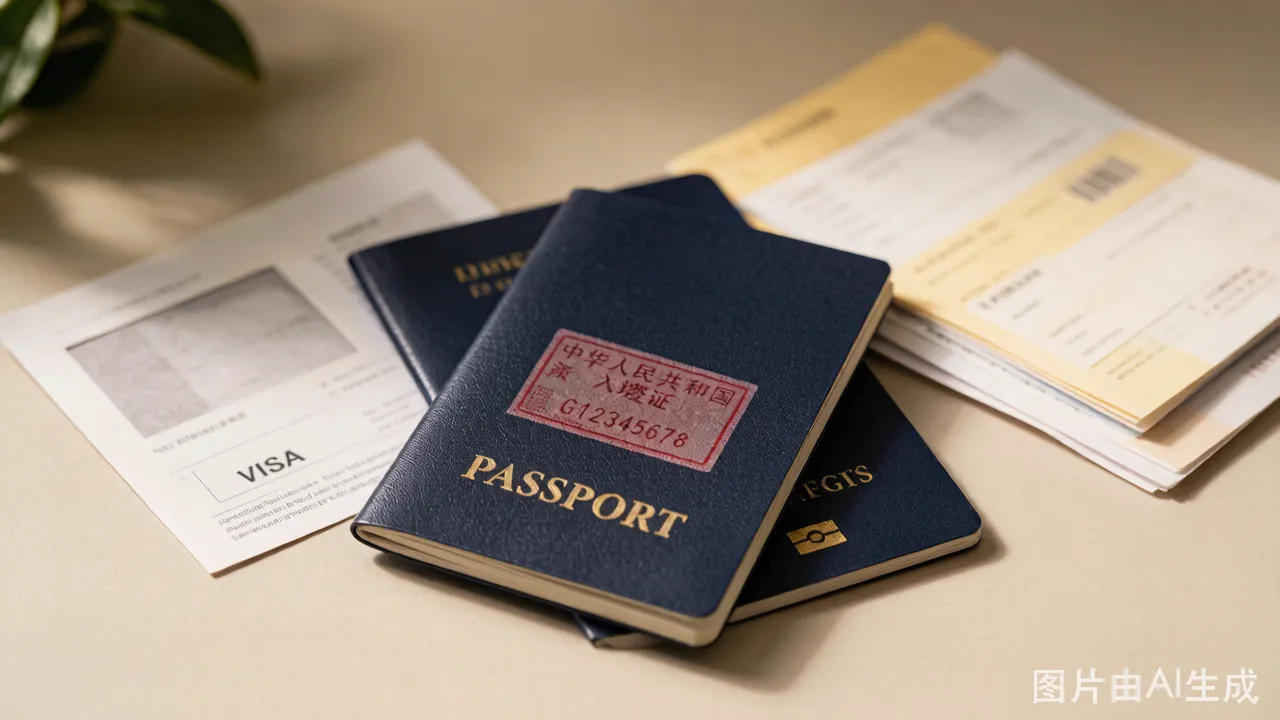
If your nationality is not on the visa-free list, or you plan to stay longer than 30 days, work, or study, you need a visa. You apply before you travel. There is no visa-on-arrival for mainland China. The entire process runs through two official online platforms. No agent, no agency, no middleman can skip these steps.
Visa Types for Short-Term Visitors
You pick one visa type. Consulates reject applications that pick the wrong one. Match your actual activity to the correct category.
- L Visa (Tourism). Sightseeing, visiting family for short periods, leisure travel. You need a round-trip ticket, hotel bookings, and a basic itinerary showing where you will go. A 30-day single-entry L visa is the most commonly issued short-term visa for first-time applicants. Multiple-entry L visas (valid for 6 or 12 months, allowing 30 or 60 days per stay) are available if you have a previous China visa in your passport.
- M Visa (Business and Trade). Commercial meetings, trade negotiations, factory inspections, equipment installation oversight. You need an invitation letter from a Chinese company. The letter must state the company name, the purpose of your visit, exact dates, and include the company's official round stamp. A letter from your own employer does not count. The Chinese host organization must issue it.
- F Visa (Exchange and Academic Visits). Short-term academic conferences, cultural exchanges, unpaid lectures, non-commercial research visits. You need an invitation from a Chinese institution with the same stamp requirement as the M visa.
Long-term categories: Z (work), X1/X2 (study), Q1/Q2 (family reunion). Short-term visas cannot convert to long-term categories inside China. If you hold an L visa and a Chinese company offers you a job, you must leave China, apply for a Z visa from abroad, and re-enter. No exceptions.
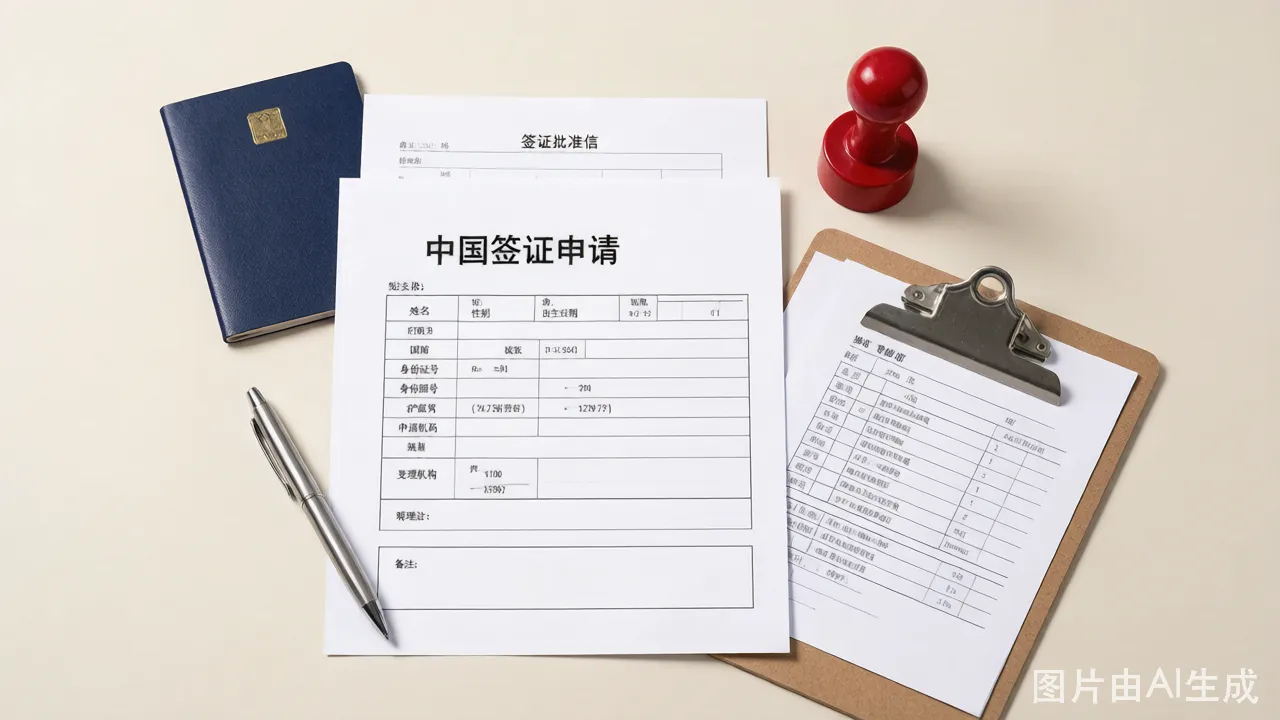
What the Visa Form Looks Like
You open the Consular Affairs Platform at consular.mfa.gov.cn/VISA/ and click "Start My Application." The form loads as a multi-page browser window. Adobe Flash is dead. The form now runs on HTML5. Chrome and Edge work. Safari sometimes breaks on the photo upload step. Firefox works if you disable tracking protection for the site.
The form has 18 sections. Here is what each one asks for:
- Section 1: Personal information. Exact name as written in your passport. Include hyphens, apostrophes, and middle names. If your passport says "O'Reilly-Smith, James Patrick," type every character of that.
- Section 2: Passport details. Number, issuing country, date of issue, date of expiry. These must match your passport data page character for character.
- Section 3: Occupation and employer. Write your current job title and company name. "Unemployed" is acceptable but draws additional scrutiny. Consular staff may ask how you will fund your trip.
- Section 4: Education. Highest degree obtained and institution name. Students list their current school.
- Section 5: Family information. Names of parents, spouse, and children. Even if they are not traveling with you.
- Section 6: Travel history. List every trip to China in the past 5 years with exact dates. If you visited in 2019 for 12 days, provide the month and year. The consulate checks this against internal records.
- Section 7: Previous Chinese visas. Type, issue date, issuing office. If your previous visa is in an expired passport, upload a scan of that old passport's data page and visa page.
- Section 8: Contact in China. Name, address, phone number of your host organization or hotel. For M and F visas, this must match the invitation letter.
- Section 9: Emergency contact. Someone in your home country who can verify your identity. Not your traveling companion.
- Sections 10-14: Trip details. Entry and exit dates, cities you will visit, accommodation details, who pays for the trip. Be consistent. If your invitation letter says 5 days and your form says 14 days, the consulate returns the application for correction.
- Section 15: Health and security declarations. Answer each question truthfully. Prior visa rejections or entry denials appear here. The consulate already knows about them. Lying triggers an automatic rejection.
- Section 16: Photo upload. 48mm x 33mm, white background, no glasses, no head covering (religious head coverings excepted), taken within 3 months. The system auto-rejects photos with shadows, colored backgrounds, or visible retouching artifacts.
- Section 17: Declaration and signature. You type your name as a digital signature. Do not use a stylized signature. Type your name exactly as it appears on the form.
- Section 18: Review and submit. Read every field before hitting submit. Corrections after submission require you to contact the Visa Application Centre and start a withdrawal process that takes 2 to 3 working days.
The form auto-saves every 60 seconds. You can close it and return using the "Continue an Incomplete Application" button. Drafts expire after 30 days. Set a calendar reminder.
Official Application Channels
Two platforms. Nothing else.
-
China Consular Affairs Platform (consular.mfa.gov.cn/VISA/). Three functions: Guidance on Visa Application, Start My Application, and Track the Status of My Application. Use this if your country has no dedicated Visa Application Centre, or if you are in a country where the Centre routes through this platform.
-
China Visa Application Service Centre (visaforchina.cn). Select your country and city from the dropdown. Click "FOR VISA." The system redirects you to a localized portal. Covers the US, UK, Canada, Australia, New Zealand, EU member states, Japan, South Korea, and most other countries with Chinese diplomatic missions.
Picking the wrong location invalidates your application. The London Centre cannot process an application opened at the Manchester Centre. If you select the wrong city, email the original Centre, request a withdrawal, and wait for confirmation before starting over. The withdrawal takes 2 to 3 working days. No refund for the time lost.
Step-by-Step Guide
Step 1: Choose the correct platform and location. Open Chrome or Edge. Disable pop-up blockers for visaforchina.cn. The photo upload and appointment booking pop-ups will not load with blockers active. Select your country of current legal residence, not your country of citizenship, unless they are the same. Select the Visa Application Centre city closest to where you live.
Step 2: Complete the online application form. Fill every field with a red asterisk. Use the exact spelling on your passport data page. Hyphens, apostrophes, spaces, accent marks: reproduce all of them. Type "N/A" for fields that truly do not apply. Blank fields cause the system to flag the form as incomplete. Confirm your visa type matches your actual purpose. The system does not auto-check this. That is your job.
Step 3: Upload supporting documents. You upload:
- Color scan of your passport data page (300 DPI minimum, JPEG or PDF, the photo and all text must be clearly readable)
- Digital passport photo meeting the specifications: 48mm x 33mm, white background, no selfies, no glasses, no retouching
- Invitation letter for M and F visas: must show the inviting organization's full name, address, phone number, the purpose and dates of your visit, and a sentence stating the organization guarantees your compliance with Chinese laws. The letter must carry the organization's official round stamp
- Proof of legal residence if you apply from a country where you are not a citizen: residence permit, visa, or utility bill in your name at your local address
- Flight reservation: buy a refundable ticket or ask your travel agent for a reservation hold. The consulate does not require a paid ticket, but they want to see a booking with your name and flight numbers
Step 4: Wait for preliminary review. After submission, the system checks completeness. Track status under "Track the Status of My Application." The three common statuses:
- Under Review. The consular clerk is checking your form. No action needed.
- Awaiting Passport Submission. Your form passed initial review. Book your in-person appointment.
- Returned for Correction. Something is wrong. The return note tells you which field needs fixing. Fix it within the time window stated in the note.
Preliminary review typically takes 2 to 3 working days. During peak season (April through September, plus the week before Chinese New Year), expect 5 to 7 working days.
Step 5: Book an in-person appointment. Once "Awaiting Passport Submission" appears, log in and pick a time slot. Walk-ins get turned away at the door. Print the appointment confirmation page. Bring it with you. Security at the Visa Application Centre checks the appointment printout against your ID before letting you through the door.
Step 6: Submit in person and pay. At your appointment:
- The security guard checks your appointment confirmation and passport at the entrance
- You take a number and wait. Wait times run 30 minutes on a quiet Tuesday morning, 2 hours on a Monday after a public holiday
- When your number appears, you approach the counter. A clerk checks your original documents against your uploaded copies. Any mismatch stops the process
- The clerk photographs you. They also take all 10 fingerprints on a digital scanner
- You pay the visa fee. Exact amounts below
- You choose standard or express service
- The clerk hands you a pickup slip with a collection date. Lose this slip and you cannot collect your passport. Photograph it immediately
Visa fees (updated June 2026). Fees vary by nationality and visa type. Standard fees in USD for a single-entry visa:
| Nationality | L Visa (Tourist) | M/F Visa (Business/Exchange) | Express surcharge |
|---|---|---|---|
| United States | $185 | $185 | +$25 |
| United Kingdom | $125 | $125 | +$35 |
| Canada | $100 | $100 | +$30 |
| Australia | $65 | $65 | +$25 |
| EU member states | $80 | $80 | +$30 |
| Japan | $45 | $45 | +$20 |
| South Korea | $40 | $40 | +$20 |
| India | $90 | $60 | +$25 |
| Russia | $55 | $55 | +$25 |
Double-entry visas cost roughly 1.5x the single-entry fee. Multiple-entry visas (6 or 12 months) cost roughly 2x. The fee is non-refundable. If your application gets rejected, you do not get your money back. Consulates accept credit cards (Visa, Mastercard), debit cards, and in some locations cash in local currency.
Step 7: Collect your passport. Return on the collection date shown on your pickup slip. Bring the slip and a photo ID. The clerk hands you your passport. Open it to the visa page.
What the Visa Sticker Looks Like
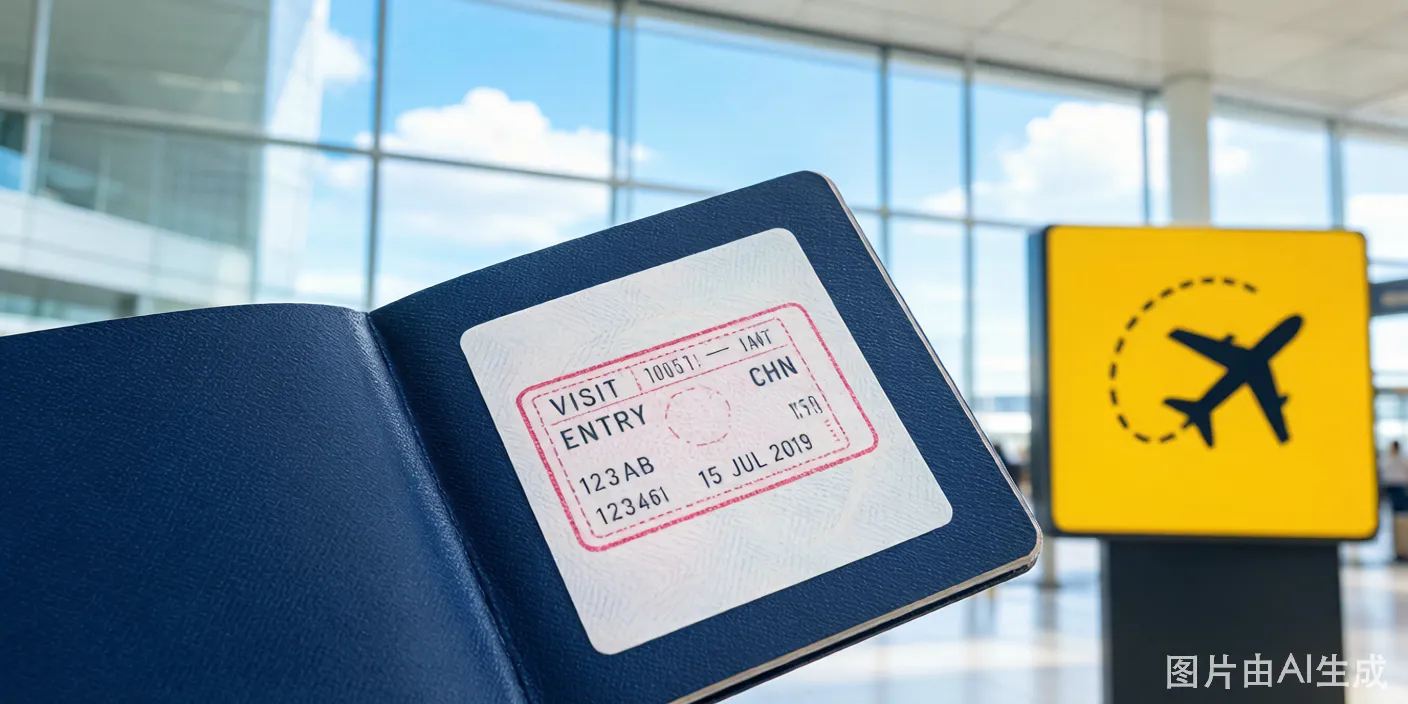
The Chinese visa is a full-page adhesive sticker. It occupies one entire page of your passport. The sticker has a light green or light blue background with a subtle watermark pattern of the Great Wall.
Look for these fields on the sticker:
- Name. Your full name exactly as it appears on your passport. Check every character. A missing hyphen or swapped letter here means the visa is invalid.
- Passport Number. Must match the number on your passport data page. The consulate occasionally transposes digits. Verify this at the counter.
- Visa Category. Displays a single letter: L, M, F, Z, X1, X2, Q1, Q2. Confirm it matches what you applied for. An L visa when you need an M visa requires a re-application.
- Entries. Shows 01 (single), 02 (double), or M (multiple). If you booked a trip involving two entries (fly to Shanghai, side trip to Tokyo, return to Beijing), a single-entry visa shuts you out on the second leg. Fix this before leaving the counter.
- Duration of Each Stay. Shows the maximum number of days per entry: 030 for 30 days, 060 for 60, 090 for 90. This is the hard limit. No extensions from inside China for short-term visas.
- Issue Date. The date the consulate issued the visa. This is not the validity start date.
- Enter Before. The date by which you must use the visa to enter China. After this date, the visa expires even if you never used it. Most short-term visas give you 90 days from issue to enter. Some consulates issue 30-day validity windows. Check this date before you book your flight.
- Issuing Office. Shows the city and consulate name: "Beijing," "Shanghai," "London," etc.
- Photo. A laser-printed black-and-white version of the passport photo you submitted.
- QR Code. A square matrix barcode in the bottom left corner. Border officers scan this at immigration. Do not fold, scratch, or obscure it.
If any field is wrong, point it out immediately. The clerk can sometimes correct minor errors on the spot. Major errors (wrong visa category, wrong number of entries) require a new application and a new fee. You will not get a refund for the error.
Processing Times by Consulate
Processing speed varies by location. Standard processing means 4 to 7 working days from the date the consulate receives your passport. Express service shortens this to 1 to 3 working days. Both timelines exclude mailing time, weekends, Chinese public holidays, and the public holidays of the country where you apply.
Real-world timelines from verified applicants in 2026:
| Consulate/Centre | Standard (actual) | Express (actual) |
|---|---|---|
| London | 5-6 working days | 2-3 working days |
| Washington DC | 6-8 working days | 2-4 working days |
| New York | 6-8 working days | 2-4 working days |
| Los Angeles | 5-7 working days | 2-3 working days |
| Toronto | 5-6 working days | 2-3 working days |
| Sydney | 4-5 working days | 1-2 working days |
| Paris | 4-5 working days | 1-2 working days |
| Berlin | 5-6 working days | 2-3 working days |
| Tokyo | 3-4 working days | 1 working day |
| Seoul | 3-4 working days | 1 working day |
| Singapore | 3-4 working days | 1 working day |
The US consulates run slower. Budget 2 full weeks with mailing time if you apply in the United States using standard service. Apply 3 weeks before your trip to absorb unexpected delays. Mailing a passport from the consulate back to you in a different state adds 3 to 5 days each way.
Step 8: Pre-travel check. Before departure, open your passport to the visa sticker. Confirm: validity window has not expired, entry type matches your itinerary, allowed stay duration covers your full trip, and your name is spelled correctly. Pack your supporting documents — invitation letter, hotel bookings, return ticket — in your carry-on. Border officers may cross-check these against your visa type at the entry counter.
Questions the Consulate Asks
At your in-person appointment, the consular clerk may ask questions beyond what the form covers. These are the most common ones and what your answer should signal.
"Why are you visiting China?"
Wrong answer: "I'm going to help my friend's company with some projects and also do some sightseeing."
Right answer: "I am attending business meetings in Shanghai from April 3 to April 7 with Shanghai Trading Company. They sent me the invitation letter. I will return on April 8."
The consulate wants a single, clear purpose. A mix of tourism and business is the M visa, not the L. State your primary activity.
"Who is paying for your trip?"
Wrong answer: "I'm not sure. My company is covering some of it and I'll pay for the rest."
Right answer: "I am paying for my flights and hotel. My host company is covering meals and local transport during the business meetings. My bank statement is in the supporting documents."
The consulate checks whether you have enough money for the trip. If someone else pays, that someone needs to appear in your documents.
"Where have you traveled in the past 5 years?"
The clerk is comparing your answer to your travel history section on the form. Any discrepancy triggers follow-up questions. Answer from the form. Do not add trips you forgot to list.
"Where do you work and what is your position?"
The consulate verifies employment against your application. Students and unemployed applicants should state their current status clearly: "I am a third-year student at University of Toronto" or "I am currently unemployed and will fund this trip from savings."
"Have you been to China before?"
Wrong answer: "Yes, a few times, I can't remember the exact dates."
Right answer: "Yes, I visited in March 2022 for 10 days on an L visa. My previous visa is in my expired passport. I uploaded a scan of it."
The consulate already sees your China travel history in their system. They are checking your honesty. If you forgot to list a trip, tell them now. It looks better than them discovering it and concluding you hid it.
"Do you have relatives in China?"
If you do, say who they are, where they live, and their relationship to you. The consulate is checking for potential overstay risk. Having relatives is not disqualifying, but hiding them looks suspicious.