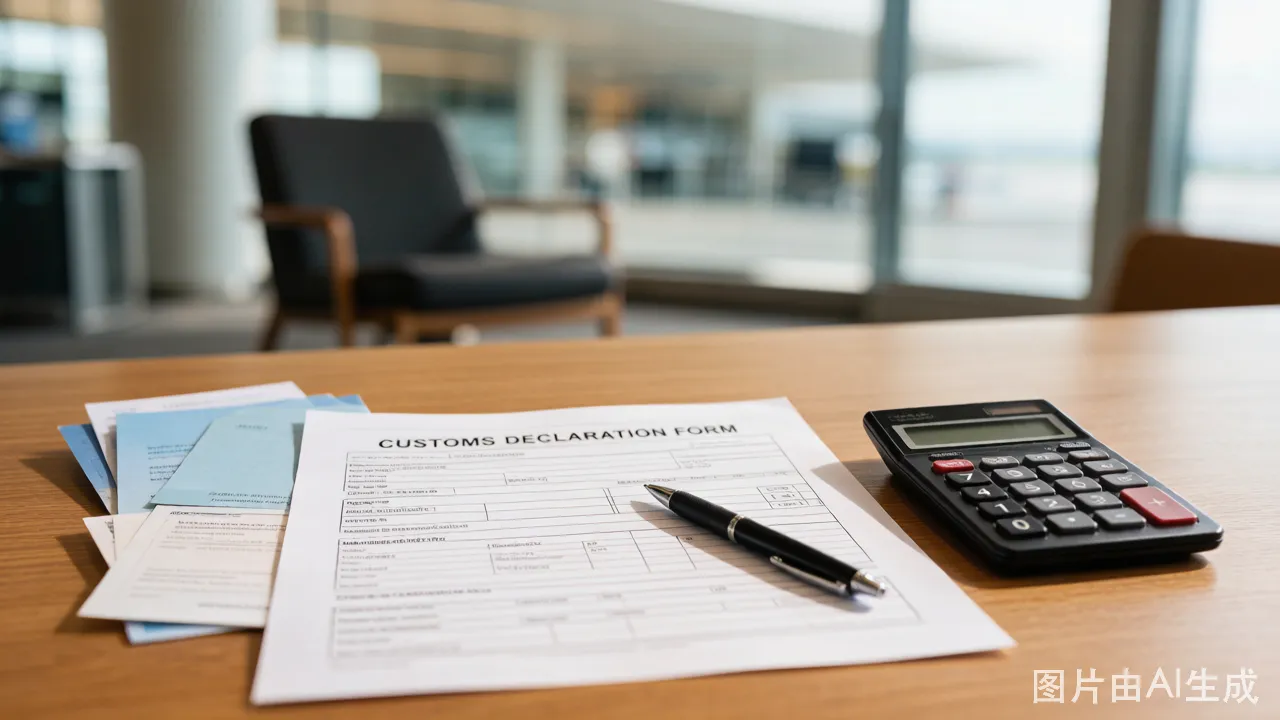
China has specific limits on how much physical cash you can bring across the border. These rules apply both on entry and exit. The rules are straightforward, but getting them wrong has serious consequences.
The Declaration Form — What It Looks Like
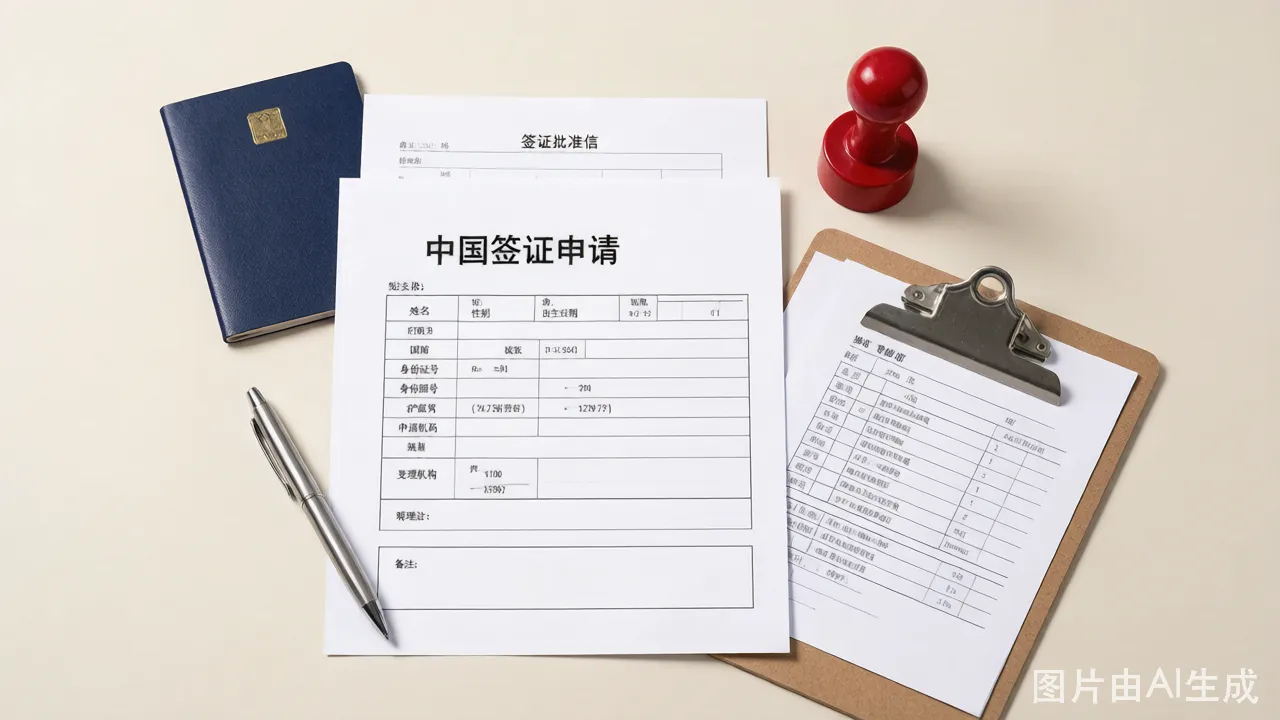
The China Customs Declaration Form is a single A4-sized document printed in both Chinese and English. You will find it in the seat-back pocket on the plane (most airlines serving China carry them) or on a desk in the arrivals hall before you reach the inspection zone.
The form has five main sections:
Section 1: Personal Information — Your full name as it appears on your passport, gender, nationality, date of birth, passport number, and flight/train/ship number. Fill this out exactly. A mismatch between the form and your passport will send you back to the form desk.
Section 2: Arrival/Departure Details — Date of entry, port of entry, and your intended address in China. For the address, write the name of your hotel and the district, or your host's address. A vague answer like "Beijing" is not accepted.
Section 3: Articles to Declare — This is the critical section. It has a checklist of categories with "Yes/No" checkboxes: cash and monetary instruments, gold and precious metals, radio transmitters/receivers, cultural relics, animals and plants, and "other articles required to be declared." Next to the cash checkbox, there is a blank line where you write the amount.
Section 4: Declaration Details — If you checked "Yes" for any category in Section 3, you fill in the specifics here. For cash, you write: the currency type, the exact amount, the source of the funds (personal savings, business expenses, gift), and what you intend to use the money for during your stay.
Section 5: Signature — Sign and date the form. The officer compares your signature to the one in your passport.
After you hand the form to the customs officer and it is processed, you receive a stamped copy back. This copy is your proof of legal entry. Do not lose it. You will need to present it when you leave China if you are carrying the remaining cash back out.
RMB (Chinese Yuan) Limit — The 20,000 RMB Threshold
You may carry up to 20,000 RMB in cash when entering or leaving China. This is a hard limit — there is no declaration process that allows you to carry more. If you need to move more than 20,000 RMB, you must use electronic transfer methods or traveler's checks.
What 20,000 RMB Looks Like in Practice
A stack of 200 one-hundred-yuan notes is roughly 2 cm thick and fits in a standard envelope. That is your entire allowance. It feels like a lot when you count it out, but for a multi-week trip with hotel deposits and large cash expenses, it can go quickly.
Examples — How the Limit Plays Out
| Scenario | RMB Carried | Status |
|---|---|---|
| Tourist with 5,000 RMB for a one-week trip | 5,000 | Fine. Well under the limit. |
| Business traveler carrying 18,000 RMB for expenses | 18,000 | Fine. Under the threshold. No form needed for RMB. |
| Student arriving with 20,000 RMB in cash for a semester | 20,000 | At the limit. Legal, but you are at the edge. One extra yuan and you are over. |
| Family of 4, each carrying 15,000 RMB (60,000 total) | 15,000 per person | Technically per-person. The officers may ask questions if they see four related travelers each at the limit. |
| Expat returning with 25,000 RMB in savings | 25,000 | Over the limit. The 5,000 excess can be seized. |
The 20,000 RMB limit applies per person. Splitting the cash among family members to stay under the limit technically works, but customs officers may question this if they suspect structuring.
Foreign currency counts separately. You can carry up to 20,000 RMB AND up to USD 5,000 equivalent in foreign currency simultaneously without declaration. The limits are independent.
Foreign Currency Limit — USD Equivalent Explained
For foreign currency (USD, EUR, GBP, JPY, etc.), the rules are tiered:
- Up to USD 5,000 equivalent: No declaration required. Walk through the green channel.
- USD 5,000 to USD 10,000 equivalent: You must complete a written customs declaration form. A permit from a bank or foreign exchange authority is generally required.
- Above USD 10,000 equivalent: Strictly controlled. You need a permit from the State Administration of Foreign Exchange (SAFE) or an authorized bank in advance. Showing up at customs without this permit will result in the excess cash being held or refused.
USD Equivalent — How to Calculate It
The foreign currency equivalent is calculated using the official exchange rate on the day of entry. You do not need to calculate it yourself — the customs system does it — but you should know roughly where you stand.
As of mid-2026, approximate equivalents:
- 5,000 USD ≈ 4,600 EUR ≈ 3,900 GBP ≈ 720,000 JPY ≈ 6,700 CAD ≈ 7,500 AUD
- If you are carrying a mix of currencies, add their USD equivalents together
A practical example: you have 2,000 USD in your wallet, 1,500 EUR in your money belt, and 100,000 JPY from a stopover in Tokyo. That is roughly 2,000 + 1,630 + 700 = 4,330 USD equivalent. You are under the threshold, no declaration needed. But if you had 3,000 USD and 2,500 EUR, you would be at approximately 5,720 USD equivalent — over the limit, and you must declare.
How to Declare Cash
If you are carrying cash that requires declaration:
- Request a Customs Declaration Form — available on the plane before landing or at the customs area in the arrival hall.
- Fill in your personal details (passport number, name, nationality, flight number).
- In the "Articles to Declare" section, specify:
- The currency type(s)
- The exact amount(s)
- The source and intended use of the funds
- Proceed through the Red Channel (Goods to Declare) and hand the form to a customs officer.
- The officer may ask questions about the source and purpose of the cash. Answer truthfully and provide supporting documents if available (withdrawal receipt, bank statement).
- Keep the stamped copy of the declaration form — you will need it when you leave China if you are taking the remaining cash out.
What Happens If You Don't Declare
There is a difference between "I forgot" and "I tried to hide it," and Chinese customs distinguishes between the two.
Scenario A: You genuinely forgot. You walk through the green channel with 7,000 USD equivalent in foreign currency. The X-ray picks up the cash density. The officer pulls your bag, opens it, finds the money. You explain honestly that you didn't realize you were over the threshold. Most likely outcome: you fill out the declaration form on the spot, the money is counted, and you may receive a verbal warning. The cash is not confiscated because you were over by a modest amount and were cooperative.
Scenario B: You tried to hide it. Cash is found stuffed in socks, sewn into jacket linings, or split into small bundles and hidden in different compartments. This pattern screams deliberate concealment. The officer will treat this as an intentional evasion. The undeclared amount can be confiscated. You will be fined. A customs violation record is created.
Scenario C: You are significantly over the threshold. If you walk through the green channel with 30,000 USD equivalent, the assumption is that you knew exactly what you were doing. The excess above 5,000 USD equivalent can be seized. You will receive a written violation notice. This record may affect your ability to get Chinese visas in the future.
The key variable in all three scenarios is how you behave. Cooperative, confused, and apologetic gets you leniency. Defensive, argumentative, or evasive confirms the officer's initial suspicion.
ATM Withdrawal Limits in China
Your home bank's ATM card works in China, but the limits are worth understanding before you rely on this as your primary source of cash.
Chinese ATM daily withdrawal limit: Most bank ATMs in China cap foreign card withdrawals at 2,500 to 5,000 RMB per transaction, with a daily limit of 10,000 to 20,000 RMB depending on the bank and your card type. Bank of China and ICBC ATMs tend to have the highest limits.
Your home bank's limit: Whatever your home bank sets as your daily ATM withdrawal cap — typically 300 to 1,000 USD equivalent per day — applies on top of the Chinese ATM's limit. Whichever is lower is the one that matters. If your home bank caps you at 500 USD (3,600 RMB) per day and the Chinese ATM allows 10,000 RMB, you can only pull 3,600 RMB.
Fees stack up. A typical withdrawal involves:
- The Chinese ATM fee: 10-20 RMB per transaction (some banks waive this)
- Your home bank's foreign ATM fee: 2-5 USD per transaction
- Your home bank's foreign exchange fee: 1-3% of the amount
This means pulling small amounts frequently is expensive. If you plan to use ATMs as your main cash source, withdraw the maximum your limits allow in a single transaction to minimize the per-withdrawal fees.
ATMs that work with foreign cards: Look for the Visa, Mastercard, Plus, or Cirrus logo on the machine. Bank of China (BOC), Industrial and Commercial Bank of China (ICBC), China Construction Bank (CCB), and Agricultural Bank of China (ABC) branches all have ATMs that accept foreign cards. The English language option is available on start-up at most machines — look for the "English" button on the screen, usually in the bottom-right corner before you insert your card.