
You land at a Chinese airport. You exit the aircraft into the jet bridge. Above you, overhead signs in Chinese and English point the way. The process follows a strict sequence. Here is exactly what happens, step by step, with what you see, what you hear, and what you need to do.
Step-by-Step Guide
Step 1: Follow Signs to Arrivals / Immigration
After leaving the aircraft door, the corridor splits. One sign reads "Transfer / 中转" with an arrow pointing left. Another reads "Arrivals / 到达" pointing straight ahead. You follow "Arrivals." If you have a connecting flight within China, you follow "Transfer" — but know that you still clear immigration at your final destination, not at the transit point, unless you are leaving the airport.
At major hubs — Beijing Capital, Shanghai Pudong, Guangzhou Baiyun — signs appear in Chinese, English, Korean, and Japanese. Follow the English "Arrivals / Immigration" signs. There are no wrong turns — the corridor funnels all arriving passengers toward immigration. You cannot accidentally end up at baggage claim without passing through immigration first.
Walking time from the aircraft gate to immigration: 5-15 minutes depending on your gate assignment. At Shanghai Pudong Terminal 1, some remote gates require a 12-minute walk plus a shuttle train. At Beijing Capital Terminal 3, the walk is 10-18 minutes. Do not stop for bathrooms or duty-free — immigration should be your first stop. Bathrooms and shops exist after immigration too.
Step 2: Health Declaration QR Code Scan
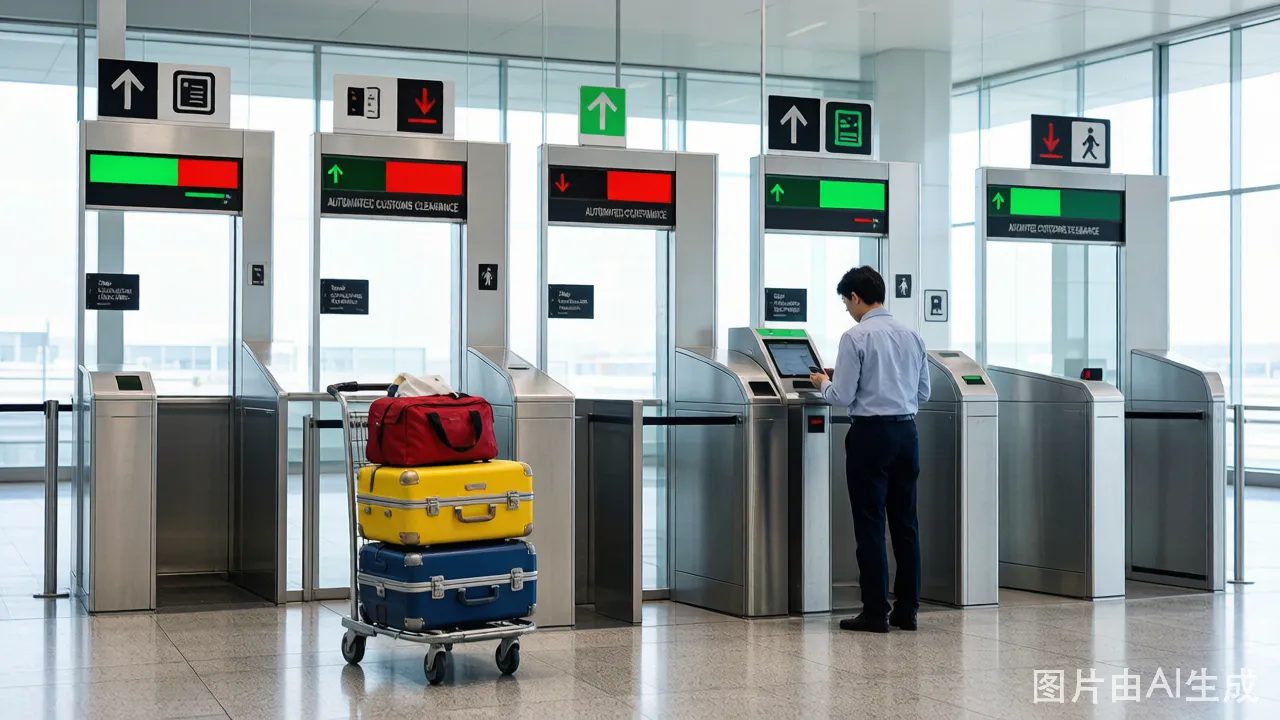
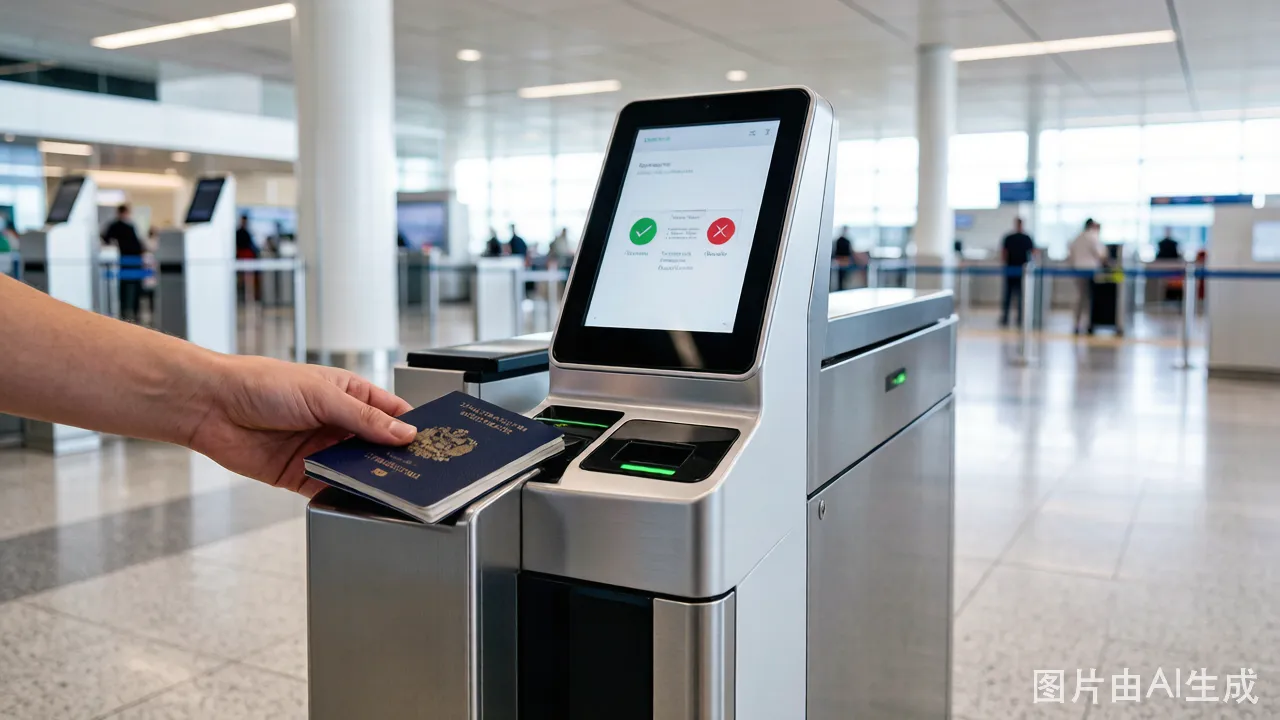
Before reaching the immigration hall, you pass through a checkpoint with scanning gates. This is the Health Declaration checkpoint. A row of waist-height scanners stands in a line, each with a small screen and a red scanning light.
You hold your phone up to the scanner — the Health Declaration QR code facing the red light. The light reads the code. The screen flashes green and displays "通过" (passed). You proceed.
If you did not complete the Health Declaration form before the flight:
- Self-service kiosks stand near the scanning area with English-language options
- You scan your passport, enter your flight number, seat number, and answer 3-5 health questions (symptoms in the last 14 days, countries visited in the last 14 days, contact with confirmed COVID-19 cases)
- The kiosk prints a QR code. Scan it at the gate
- This adds 10-15 minutes to your transit time
Screenshot your Health Declaration QR code before the flight. Screenshot it because airport Wi-Fi may be slow, your roaming data may not connect, and you do not want to be the person standing at the checkpoint frantically reloading a webpage while a line forms behind you.
Step 3: Immigration — Choose Your Lane
The immigration hall opens up in front of you. It is a large room with rows of counters — 30 to 80 counters depending on the airport. Overhead electronic signs above each counter section display the lane type. Read the signs carefully.
Lane types you see:
-
"Foreign Passports" / "外国人" / "Foreigners" — Your lane. This is where you go. Look for a counter section with this sign. The counters have uniformed officers sitting behind glass partitions.
-
"Chinese Citizens" / "中国公民" — Do not queue here. Do not even walk toward these counters. Chinese citizens-only lanes are physically separated in some airports. If you accidentally queue here, the officer at the counter sends you to the foreign passport lane.
-
"Self-Service / E-Channel" — E-gates for biometric passport holders with prior fingerprint registration. If this is your first entry to China, skip these. If you have entered China before and used an e-gate successfully, you can use these. See the e-gate guide for details.
-
"Diplomatic / APEC / Crew" — Special lanes for diplomatic passport holders, APEC Business Travel Card holders, and airline crew. Do not queue here unless you hold one of these credentials.
-
"Visa-Free" or "24/72/144-Hour Transit" — Some airports (Shanghai Pudong, Beijing Capital, Guangzhou Baiyun, Chengdu Tianfu) have dedicated lanes for visa-free and transit-without-visa travelers. Use these if available — the queue is typically shorter.
Queue discipline is strict. Stand behind the yellow line at the counter. Wait until the officer gestures for you to approach. Do not step up to the counter while the previous traveler is still there.
Wait time: 5-45 minutes depending on how many international flights landed at the same time. Morning (6:00-9:00 AM) and evening (5:00-8:00 PM) are peak international arrival windows.
Step 4: At the Immigration Counter — What You Hand Over
You step up to the counter. A uniformed officer sits behind glass. Between you and the officer: a counter surface, a small slot for passing documents, a fingerprint scanner on your side of the glass, and a camera lens above the officer's window pointed at you.
Hand through the document slot:
- Your passport, opened to the photo page
- Your arrival card, if one was distributed on the plane (most major airports no longer use paper arrival cards — if you were not given one on the flight, you do not need one)
Arrival card sample (if your flight distributed one):
中华人民共和国出入境边防检查站
ARRIVAL CARD

Family Name: ____________________
Given Name(s): ____________________
Sex: □ Male  □ Female
Date of Birth: ____ / ____ / ________ (DD/MM/YYYY)
Nationality: ____________________
Passport No.: ____________________
Visa No.: ____________________ (if applicable)
Flight No. / Vessel Name: ____________________
Purpose of Visit: □ Tourism  □ Business  □ Visit  □ Work  □ Study  □ Other
Address in China: ____________________
Signature: ____________________
Date: ____ / ____ / ________
Fill it in block capitals. Use a black or blue pen. The address in China: write your hotel name and the city. "Hilton Beijing, 1 Dongfang Road, Beijing" is sufficient.
Step 5: What the Officer Does While You Wait
You hand over your passport. Here is what the officer does, sequentially:
-
Opens your passport to the photo page. Holds it up, looks at the photo, looks at your face. Looks again at the photo. Looks again at your face. This direct comparison takes 3-5 seconds.
-
Scans the passport data page. Passes your open passport under a desktop scanner. The scanner beeps — your passport machine-readable zone (MRZ) data is now in the system. The officer's screen populates with your name, nationality, date of birth, and passport number.
-
Checks the screen for alerts. The officer stares at their monitor for 5-15 seconds. During this time, the system runs your passport against: wanted persons databases, entry ban lists, overstay records from previous visits, and stolen passport registries. This is the most important 15 seconds of your entry process. The officer's face remains neutral regardless of what the screen shows.
-
Types information into the system. If no alerts appear, the officer types: your purpose of visit (they select from a dropdown), your intended length of stay, your accommodation address, and your flight number. This typing takes 30-60 seconds. You hear the keyboard clicking.
-
Checks your visa or visa-free status. For visa holders: verifies the visa is valid, not expired, correct entry type (single vs. multiple), and the permitted stay duration. For visa-free travelers: verifies your nationality qualifies, you have not exceeded the maximum stay days this calendar year, and you have a plausible purpose of visit.
-
May ask questions. See the question section below. The officer asks while typing. They do not stop typing when asking — they type and talk simultaneously.
-
Instructs you to provide fingerprints. The officer gestures to the fingerprint scanner on your side of the counter. See the fingerprint section below.
-
Takes your photo. The camera above the counter fires automatically during the fingerprint scan. There is no flash, no countdown, no "smile" instruction. The photo is taken for the entry record.
-
Stamps your passport. The officer pulls out a stamp, presses it onto your visa page or a blank page, and writes a number with a pen. See the stamp section below.
-
Hands back your passport. The officer pushes the passport back through the slot. Says nothing, or says "可以了" (finished / you may go). You take your passport and walk forward.
Total time at the counter: 60-120 seconds if no questions are asked. 2-5 minutes if questions are asked and answered.
Step 6: Fingerprint Scanning — Exact Order
The officer points to the fingerprint scanner on your side of the counter. The scanner is a glass square about the size of two postage stamps, mounted at a slight angle, with a blue light around the edge.
Scanning order:
- First: Right hand, all four fingers together (not the thumb). Place index, middle, ring, and pinky fingers flat on the scanner glass. Press evenly — not too soft, not too hard. The light turns from blue to green when the scan registers.
- Second: Left hand, all four fingers together. Same process.
- Third: Both thumbs simultaneously. Place both thumbs on the scanner glass side by side. Press evenly.
The scanner captures a high-resolution image of your fingerprints. It compares them against the database — looking for matches (if you have entered before) or creating a new record (if this is your first entry).
If the scanner rejects your prints:
- You hear a low beep and see a red flash. The light resets to blue.
- Reason 1: Dry fingers. Breathe on your fingertips to add moisture. Rub your fingers together. Press again. This fixes 80% of failures.
- Reason 2: Pressure too light or too heavy. Adjust your pressure. Think of pressing an elevator button — firm but not forceful.
- Reason 3: Fingers not flat. Place the entire pad of each finger on the glass — not the tips.
- Reason 4: Sweat, cuts, or scars. If a particular finger will not scan, the officer may ask you to use the other hand's fingers, or proceed with partial prints. This is not a red flag — some people simply have difficult-to-scan fingerprints.
The officer will not be annoyed. Fingerprint failures happen multiple times per shift. Try twice, and if it still fails, the officer proceeds with what they have.
Step 7: Questions the Officer May Ask — and the Answers They Expect
An immigration officer's job is to confirm your stated purpose matches your entry authorization and that you present no overstay or illegal work risk. Their questions are short, direct, and intended to be answered in one sentence.
Question 1: "What is the purpose of your visit?"
The officer asks this while typing, without looking up from their screen.
Your answer must match your visa or visa-free category exactly. If you entered on a tourist visa but answer "meeting suppliers," you have a problem — business activities require a business visa.
- Visa type: L (Tourist) → Answer: "Tourism" or "Sightseeing"
- Visa type: M (Business) → Answer: "Business meetings" or "Meeting clients"
- Visa type: F (Exchange/Visit) → Answer: "Visiting a conference" or "Academic exchange"
- Visa-free entry → Answer: "Tourism" (visa-free entries are for tourism, business, and family visits only)
- Transit without visa (24/72/144-hour) → Answer: "Transit. My next flight is to [destination] on [date]."
Do not expand. Do not explain. "Tourism" is a complete answer.
Question 2: "How long will you stay?"
State the number of days, not a date range. Bad answer: "About a week or two, maybe until the 25th." Good answer: "Fourteen days." Your stated stay duration must be within your visa or visa-free allowance. If your visa-free entry allows 30 days and you say "Six weeks," you have announced your intention to overstay. Know your maximum stay before you reach the counter.
Question 3: "Where will you stay?"
State the hotel name and city. Good answer: "The Peninsula Beijing." If you do not have a hotel booking yet, state the city: "I will find a hotel in Shanghai." Have a plausible answer. "I don't know" invites follow-up questions and potential delay.
If staying with a friend or family, state: "With a friend in [city]. Their address is [address]." Have the address written down — in Chinese characters, not pinyin. Show the address on your phone or a printed paper.
Question 4: "Do you have a return ticket?"
Answer: "Yes." If you have the booking confirmation on your phone, offer to show it. The officer may not ask to see it — the question itself is sometimes a screening technique. The officer watches your reaction to the question more than they check the ticket. A calm "Yes" with a reach toward your phone is the expected response.
If you do not have a return ticket, state your planned departure: "I plan to book a ticket for [date]." Be prepared for follow-up questions. Visa-free travelers without return tickets are more likely to be questioned because the rules technically require proof of onward travel.
Question 5 (business travelers): "Which company are you visiting?"
State the company name. The officer types it into the system. If the company name is in Chinese, read it from the business invitation letter — the letter your host company provided. The officer may cross-reference the company name against your visa application.
Question 6 (rare, for longer stays): "What is your occupation?"
Answer with your job title in one or two words: "Engineer," "Teacher," "Consultant," "Retired." This confirms your stated purpose — a teacher visiting for tourism is plausible. A "consultant" on a tourist visa staying for 29 days may invite a follow-up: "Are you working during your stay?" The correct answer is "No, just tourism."
How to handle the language barrier:
If the officer asks a question you do not understand:
- Say: "Sorry, could you repeat that?"
- The officer rephrases or speaks more slowly
- If still unclear, the officer calls an English-speaking colleague. Wait times for this: 2-10 minutes at major airports, longer at smaller airports
- The officer may also use a handheld translation device — speak into it normally, not slowly or loudly
Do not pretend to understand. Answering a question you did not understand, and answering incorrectly, causes far more problems than saying you did not understand.
Step 8: Check Your Entry Stamp
The officer returns your passport. Do not walk away without checking the stamp. Checking takes five seconds.
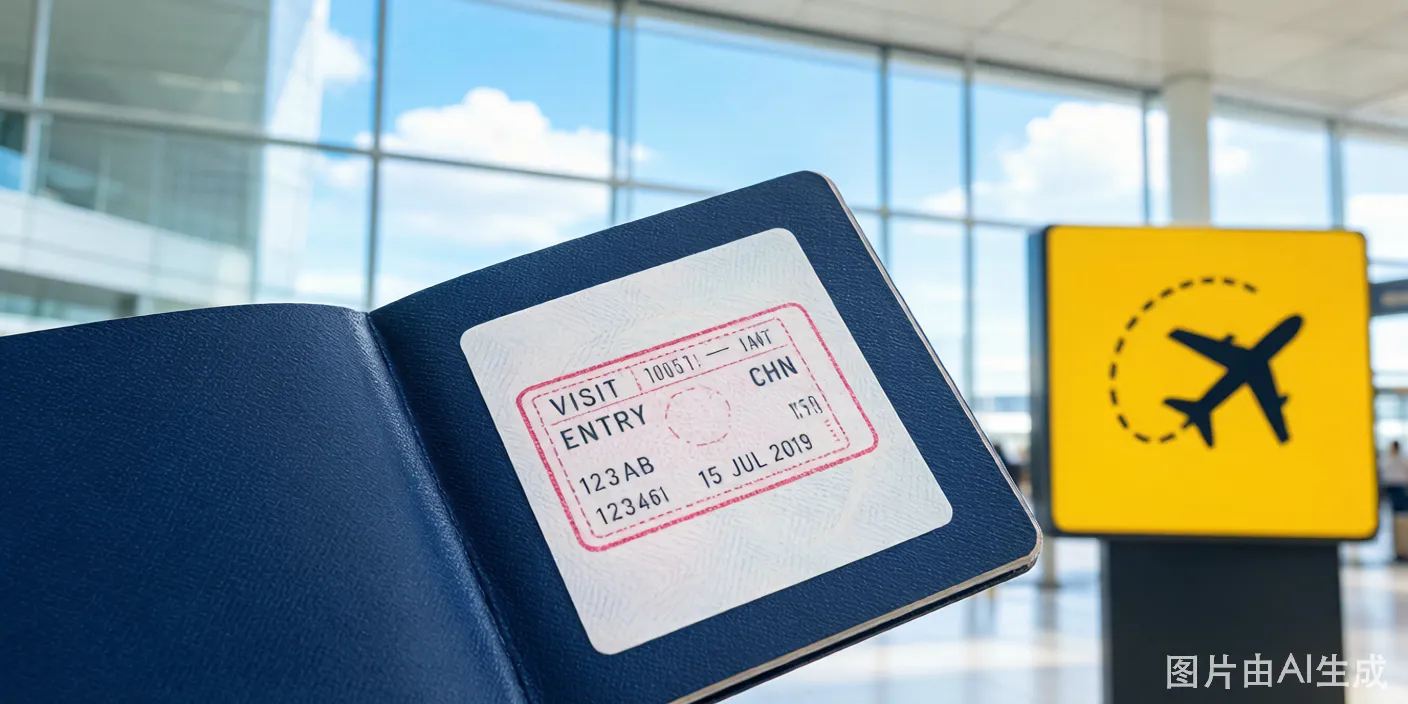
Your entry stamp is a rectangular purple stamp on a blank passport page. It shows:
- Entry date: In the format YYYY MMM DD (e.g., 2026 JUN 15). Verify the date is correct.
- Port of entry: The airport code in Chinese and English (e.g., "北京 PEK" or "上海浦东 PVG").
- Permitted stay duration: Written in pen by the officer. A number of days (e.g., "30") or a date (e.g., "2026 JUL 15"). This is the date by which you must leave China.
- Visa category code: In brackets — (L) for tourist, (M) for business, etc.
Verify three things:
- The entry date is today's date. If the stamp shows yesterday's date, a stamping error occurred — rare but fixable now, nearly impossible to fix later.
- The stay duration matches your visa. If your visa-free entry allows 30 days and the stamp says "15," the officer may have written the wrong number. Point to it and say "Thirty days?" politely. The officer may correct it.
- The stamp is legible. If the ink is smeared and the stay duration is unreadable, you have a problem. Ask the officer to clarify.
If the stamp is wrong: Do not step away from the counter. Point to the stamp. Say "Sorry, this says [X] days. My visa allows [Y] days." The officer re-checks their system, crosses out the error, and writes the correct number with a small correction stamp next to it.
If you walk away with an incorrect stamp and discover it later, corrections require visiting an immigration office — a multi-hour process.
Step 9: Baggage Claim
After immigration, follow signs to baggage claim. Signs read "Baggage Claim / 行李提取." Electronic boards display flight numbers and corresponding carousel numbers. Match your flight number to the carousel number.
Free luggage carts are available. They are released by inserting a 1 RMB coin (some newer carts are free — push to release). Keep the cart until after customs — you need it from baggage claim through the customs zone.
Wait time for bags: 10-30 minutes after reaching the carousel. Factor this into your total arrival time.
Step 10: Customs — Green or Red Channel
With your luggage, enter the customs inspection zone. See the full customs guide for detailed channel selection, duty-free limits, and inspection procedures. Summary: Green Channel if you carry nothing declarable. Red Channel if you have goods or cash to declare.
Step 11: Exit into the Arrival Hall
After customs, automatic glass doors open into the public arrival hall. This is the point where your journey from aircraft to China proper ends.
In the arrival hall, immediately in front of you:
- A crowd of people holding signs with names — drivers, hotel representatives, family members
- Currency exchange counters on the left or right wall
- ATMs lined up next to the currency exchange counters
- SIM card desks — China Mobile, China Unicom, China Telecom — with uniformed staff
- Information desk in the center of the hall
- Signs pointing to: Taxi, Metro, Bus, Parking