Do you tip in Chinese restaurants?
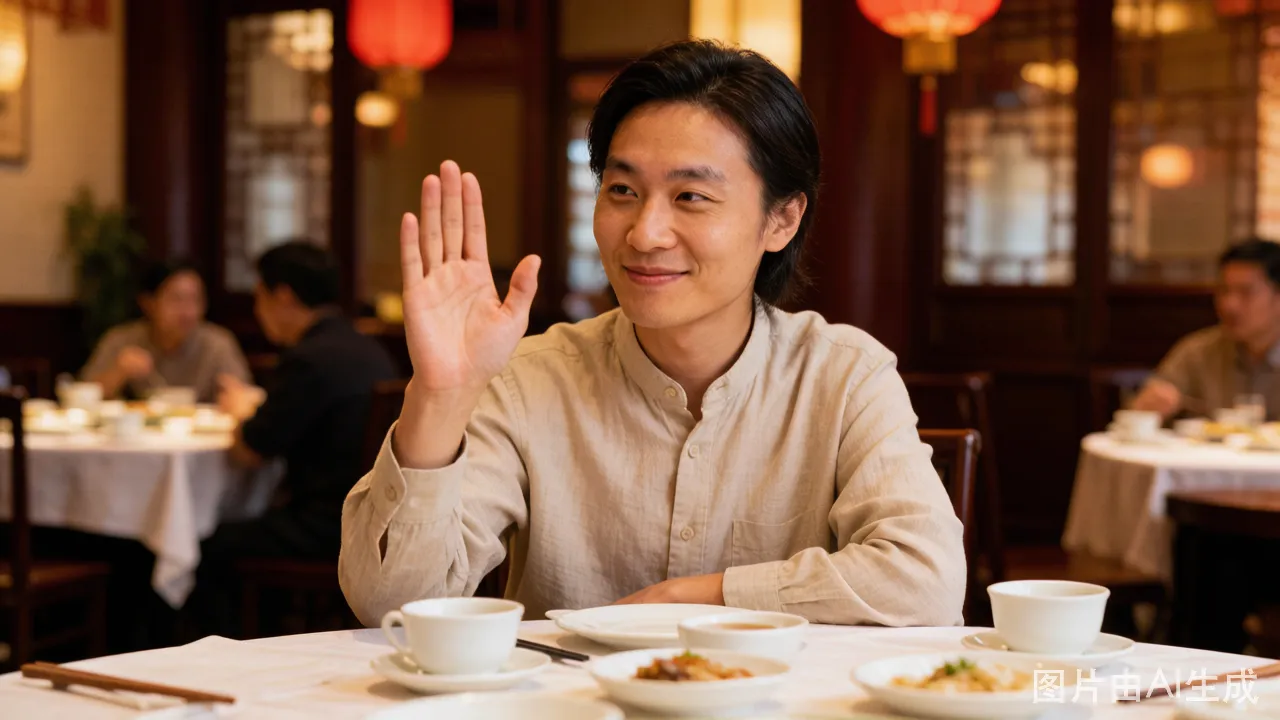
No. There is no tip line on your receipt. No tip jar at the counter. No expectation that you leave money on the table. The price on the menu is the exact amount you pay.
If you leave cash on the table and walk out, the waiter runs after you. Not because you offended anyone — because they think you forgot your change. Here is what happens: you place 80 RMB on the table for a 72 RMB meal. You walk toward the door. The waiter picks up the money, counts it, realizes the excess, grabs the 8 RMB, and chases you. They catch you at the door or in the parking lot, hand you the 8 RMB, and say "你的钱" (your money). This is not rudeness. This is the cultural norm. The transaction was complete at 72 RMB. The extra 8 RMB does not belong to them.
What happens if you insist: You push the money back and say "Keep it, for you." The waiter looks confused. They hold the money uncertainly, unsure what to do. A second staff member may be called over. They discuss in Chinese. Eventually, someone accepts the money to end the awkwardness, but the entire interaction has created confusion and discomfort. You have introduced a foreign rule into a transaction that followed a clear, complete set of rules.
Fine dining and hotel restaurants: Some high-end hotel restaurants in Shanghai, Beijing, and Guangzhou catering to international guests have added a 10-15% service charge to the bill. This charge is printed on the menu ("加收10%服务费") and on the receipt. It is not a discretionary tip — it is an automatic charge, like a service charge in London or Paris. You pay what the bill says. Adding money on top of the service charge doubles the awkwardness.
Do you tip taxi or Didi drivers?
Taxi drivers: No. The meter shows a number — 28 RMB, 54 RMB, 112 RMB. You pay exactly that number. If you hand over 100 RMB for a 54 RMB fare, the driver counts out your 46 RMB in change — coins and notes, down to the last 1 RMB.
If you say "Keep the change" with a wave of your hand, the driver pauses. They look at you. They look at the change in their hand. They try to hand it to you again. You refuse. They awkwardly pocket the coins, looking unsure if they have done something wrong.
Tipping a taxi driver does not cause offense. It causes confusion. The transaction had an agreed price — the meter. You are now changing the price after the service, which has no precedent in the transaction model the driver operates in every day, 20+ times per day, for years.
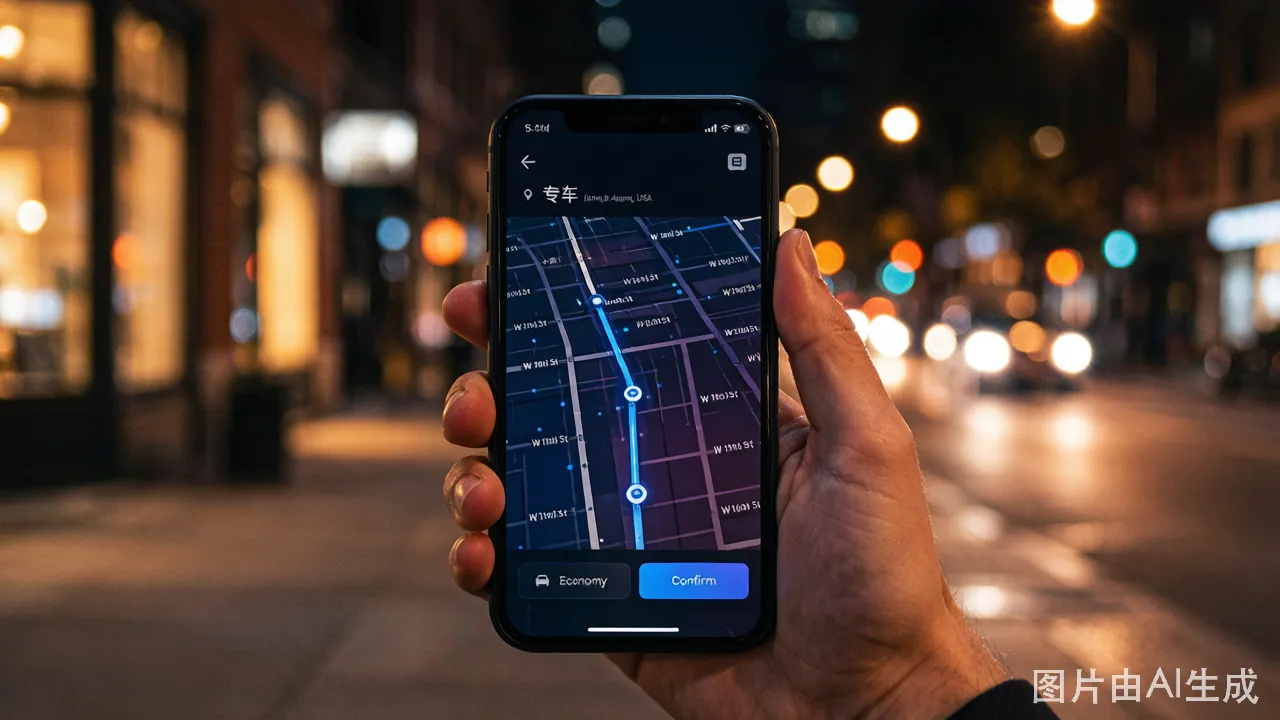
Didi drivers: The payment is automatic, contactless, and processed through the app before you even exit the car. There is no tip option in the Didi Rider app interface. The final screen shows the fare, the route on a map, and a 1-5 star rating. You rate the driver. The rating system is the replacement for tipping — a 5-star rating improves the driver's algorithm ranking and future income more than a cash tip ever would. Drivers take the rating system seriously. A 4-star rating is considered bad. Rate 5 stars for a normal ride.
Do you tip hotel staff?
Bellhop: No. A bellhop carries your two suitcases to your room. You stand in the doorway. The bellhop places the bags on the luggage rack, shows you the light switches, points to the safe and minibar, and waits. You feel the American reflex: reach into your pocket for a 20 RMB note. Do not do it. The bellhop is waiting for you to say "谢谢" (thank you) and dismiss them — not for a tip. Handing them money confuses the interaction. They may refuse, you insist, they accept awkwardly, and both of you feel slightly worse than if you had simply said thank you.
Concierge: No. The concierge recommends a restaurant, books a table, and draws directions on a map. This is their job. They are paid a salary to do this. Tipping is not part of the compensation model. A sincere "Thank you, that was very helpful" is the appropriate response.
Housekeeping: Absolutely no. Leaving money on the bedside table will almost certainly result in the housekeeping staff turning it in to the front desk as lost property. You return to your room at the end of the day to find the money still on the table, or you receive a call from the front desk: "Sir, our housekeeping staff found 100 RMB on your bedside table. Please collect it at the front desk." Housekeeping staff in China do not interpret a bedside table note and cash as a tip. They interpret it as something a guest forgot.
Five-star international hotels in tier-1 cities: At hotels like the Peninsula, Mandarin Oriental, and Ritz-Carlton in Shanghai and Beijing — properties where 60-80% of guests are international — a small tip of 10-20 RMB to a bellhop or concierge may be accepted because these staff are trained to recognize foreign tipping behavior. Even here, the tip is not expected. If you do not tip, your service does not change. If you do tip, the staff member accepts it professionally and moves on. The standard at a Chinese domestic five-star hotel (Jin Jiang, Wanda, BTG) is no tipping regardless.
What about tour guides?
Private tour guides who work with international clients have adapted to a tipping model because a significant portion of their clients tip by habit. A tip of 50-100 RMB per day for a full-day private guide is appreciated but not mandatory. The guide will not ask for it. They will not hint. They may be genuinely surprised if you tip.
For group tours, tipping is not expected. The tour price includes the guide's compensation. If you see other group members tipping, they are likely Americans or Europeans operating on their home-country instincts.
Tourist-oriented performances: Some dinner shows, tea ceremonies, and cultural performances at tourist sites (especially in Beijing, Xi'an, Guilin, and Yunnan) have developed a pseudo-tipping culture where performers extend a hand or place a tip box visibly. This is an industry adaptation targeting foreign tourists, not Chinese custom. You are not obligated to tip. If you feel pressured, keep in mind that the ticket price you paid for the performance already includes the performers' compensation.
The Specific Awkward Moment
Here is the scene that plays out hundreds of times per day when foreigners tip in situations where tipping is not customary:
You hand money to a service worker. They look at the money. They look at you. They push it back slightly — not aggressively, but with a slight shake of the head: "No, no." You push it forward: "Yes, for you." They push it back again, this time with more insistence: "不用不用" (bùyòng bùyòng — "No need, no need"). By the third volley, the worker is uncomfortable and the tipper is frustrated: "I'm trying to be nice and they keep refusing."
Both parties are behaving correctly within their own cultural frameworks. You are tipping for good service. They are refusing because accepting extra money for performing their job is socially unfamiliar and mildly embarrassing. The appropriate number of push-reject cycles is zero. Do not initiate the cycle.
Why Is There No Tipping Culture?
Four concrete reasons:
-
Full-wage labor model. Service workers in China receive their entire compensation from their employer. A restaurant waiter makes 4,000-6,000 RMB per month in a tier-1 city — a full wage, not a tipped minimum wage. The tip-dependent service industry that Americans and Europeans are accustomed to does not exist in China.
-
The price is the price. Chinese commercial culture operates on the principle that the listed price is the complete and final price. A 28 RMB bowl of noodles costs 28 RMB. Adding money after the transaction suggests the listed price was incorrect — which is socially awkward in a culture that values clear, transparent pricing.
-
Tipping has no historical precedent. Unlike Japan, where tipping was actively suppressed during modernization, or the US, where tipping was institutionalized after the Civil War, tipping simply never existed at scale in Chinese consumer culture. It is not that tipping was abolished — it never emerged.
-
Social discomfort with receiving "extra" money. In a culture where exact payment is the norm (down to the 1 RMB coin), receiving money outside the agreed transaction creates a debt imbalance. The worker now feels they owe you something in return — more service, a favor, special treatment. This is an uncomfortable position to be in for a 30-second interaction.
What to Do Instead of Tipping
- Say 谢谢 (xièxie). A genuine thank-you with eye contact and a nod carries the weight that a tip carries in other cultures. It acknowledges the service and the person providing it.
- Give a 5-star rating. On Didi, food delivery apps, and any service platform with a rating system, a 5-star rating is the Chinese equivalent of a tip. The algorithm rewards highly-rated drivers and riders with more work. A 5-star rating has concrete economic value.
- Leave a positive review. On Dianping (the Chinese Yelp), Trip.com, or Ctrip, a detailed positive review mentioning specific staff members is more valuable than a cash tip. Businesses display positive reviews prominently, and management rewards mentioned employees.
- Return as a regular customer. A restaurant where you become a recognizable repeat customer — the owners know your face, know your usual order — is the highest form of appreciation in Chinese consumer culture. Repeat business says "I value your service enough to return" more clearly than any tip ever could.
- Accept the service charge. If a restaurant adds a service charge, pay it without negotiation. The charge is part of the pricing structure, not an optional tip.
The One Exception Worth Knowing
If you hire a private driver for a full-day excursion (8-10 hours, intercity trip, or countryside tour), and the driver exceeds expectations — waits patiently at each stop, helps with translation, navigates difficult roads, carries heavy luggage — a tip of 50-100 RMB at the end of the day may be accepted without the push-reject awkwardness. Private drivers hired through hotels or travel agencies for multi-day or full-day assignments operate in a gray zone where some international tipping has normalized. This is the single scenario where a tip is likely to be accepted without cultural friction.
Even here, the tip is not required. The driver's daily rate (500-1,000 RMB) is their full compensation. A tip is a bonus, not an expectation.